
Views: 0 Author: Site Editor Publish Time: 2026-09-30 Origin: Site


Automotive manufacturers face relentless pressure to reduce vehicle weight and production expenses without compromising structural integrity or safety standards. Procurement and engineering teams often default to familiar manufacturing processes, leading to misaligned cost expectations. Evaluating metal stamping against casting requires looking beyond raw unit expenses to understand tooling amortization, secondary operations, material selection, and part consolidation potential. This guide provides a comprehensive lifecycle expense analysis, comparing the financial realities of both processes to help technical buyers determine the most cost-effective manufacturing route for specific automotive applications. We evaluate the mechanical demands of modern vehicle architectures, from EV battery enclosures to structural chassis nodes. Choosing the wrong fabrication method locks your production line into inefficient cycles, high scrap rates, and excessive secondary machining. By breaking down the exact cost drivers, you gain a clear framework for vendor selection. This ensures your engineering requirements align perfectly with your procurement budget, preventing costly mid-project redesigns and supply chain bottlenecks.
Tooling vs. Unit Cost Dynamics: Stamping generally offers lower initial tooling costs for simple 2D geometries, while die casting requires higher upfront investment but achieves lower unit costs for complex, 3D components.
Part Consolidation: Die casting often reduces overall assembly costs by combining multiple stamped components into a single cast part.
Secondary Operations Impact: The true cost of either method heavily depends on post-processing requirements, such as CNC machining or surface finishing.
Volume Break-Even: The financial viability of each process is strictly tied to production volume; accurate break-even analysis is mandatory for procurement decisions.
Evaluating manufacturing methods requires looking at the entire production lifecycle. Initial tooling represents just one piece of the puzzle. Material selection and design complexity heavily influence your final numbers. Cycle times dictate how many parts you produce per shift. Faster cycles dilute fixed overhead expenses across more units. Labor expenses add up quickly if processes require manual intervention or complex assembly. Scrap rates directly impact material utilization and raw material purchasing requirements. Secondary processing often dictates the final per-part expense. Evaluating processes based solely on per-part quotes is dangerous. You must factor in long-term tooling maintenance and tool life expectancy. Assembly labor also plays a massive role in final calculations. A cheaper individual part might require expensive downstream welding or fastening. On the shop floor, we track machine hourly rates, energy consumption, and operator wages. Melting aluminum requires massive energy inputs compared to running a mechanical press. However, the press requires continuous coil feeding and scrap removal systems. You have to account for the floor space, the auxiliary equipment, and the maintenance schedules for each machine type.
Establish your baseline engineering requirements before comparing costs. Structural strength dictates material choices and minimum wall thickness. Weight limits drive the need for lighter alloys or thinner sheet metal gauges. Thermal conductivity is essential for engine blocks and battery enclosures. Dimensional tolerances determine if secondary machining is absolutely necessary. Define your financial constraints early in the project lifecycle. Capital expenditure limits dictate what you can spend on tooling upfront. Operational expenditure targets guide your unit production goals. Balancing these constraints ensures a viable manufacturing strategy. You must align your engineering needs with your procurement budget. Failing to define these criteria leads to costly mid-project redesigns. We look at yield strength, tensile strength, and elongation properties. Crash structures require high elongation to absorb impact energy. Brackets just need enough yield strength to hold a component in place under vibration. You match the process to the mechanical reality of the part.
Hardened steel molds require significant upfront capital. The cavity complexity dictates the final tooling investment. Complex geometries require intricate mold designs, sliding cores, and ejector pin systems. This pushes initial expenses higher than simpler, single-cavity molds. Tooling lifespan is a critical factor in long-term financial calculations. Thermal fatigue eventually degrades the mold surfaces due to extreme heat cycles. High-volume production runs necessitate regular maintenance and eventual mold replacement. Budgeting for tool repair ensures uninterrupted production and prevents supply chain bottlenecks. Amortizing these high initial expenses across millions of parts makes the process viable. The tooling expense per part drops dramatically as volume increases. We machine these molds from premium H13 tool steel. They undergo rigorous heat treatment to withstand the thermal shock of molten metal. You also have to design and machine complex water cooling channels inside the die blocks. Proper thermal management prevents soldering and heat checking on the cavity surface.
Injecting molten metal at high pressure enables rapid cycle times. This speed significantly lowers labor expenses at scale. Automated extraction, quenching, and trimming further reduce manual intervention. Material utilization in this process is highly efficient compared to subtractive methods. Runners, sprues, and flash are easily recycled in-house. This recyclability offsets raw material expenses substantially. High-speed production creates a highly favorable unit expense ratio. Automotive Die Casting excels when production volume justifies the extensive setup. The process minimizes material waste while maximizing output per hour. We calculate the shot weight versus the actual part weight. The biscuit, runners, and overflows often weigh as much as the part itself. You melt that excess metal, inject it, trim it off, and throw it right back into the furnace. The energy cost of remelting is a factor, but you do not lose the raw material.
Modern automotive lightweighting initiatives rely heavily on aluminum alloys. The cost-to-weight benefits of this material are undeniable for modern vehicle architecture. Lighter vehicles achieve better fuel efficiency and extended electric battery range. Custom aluminum formulations balance raw material expenses with specific mechanical needs. These alloys offer superior heat dissipation for EV components and engine parts. Producing Custom Aluminum Automotive Die Casting Parts requires precise thermal management. The initial material expense is easily offset by vehicle performance gains. Engineers specify exact alloy blends to meet stringent crash safety standards. Silicon and copper additions improve castability and final part strength. We frequently run A380 for general structural components and A356 when we need higher ductility. Vacuum assist technology pulls air out of the cavity before injection. This reduces internal porosity and allows for thinner wall sections, driving the part weight down even further.
Stamping dies fall into distinct investment tiers based on complexity. Simple single-station blanking dies represent the lowest entry point. These are suitable for flat, basic profiles. Compound dies require a moderate investment for combined cutting and forming operations. Multi-stage progressive dies demand the highest upfront capital in the stamping category. The number of die processes directly correlates with tooling expenses. Each additional station increases the engineering, machining, and assembly required. Exponential increases in upfront tooling occur with complex, multi-bend part designs. However, these investments remain generally lower than hardened injection molds used for molten metal. Stamping offers a lower barrier to entry for medium-volume production. A progressive die consists of heavy steel die shoes, precision-ground punches, die blocks, and spring-loaded strippers. You have to engineer pilot pins to align the metal strip perfectly as it advances from station to station.
Stamping presses operate at extreme speeds, often completing hundreds of strokes per minute. Continuous coil feeding drives down labor and machine-hour expenses. Each stroke produces a nearly finished part, maximizing throughput. Specialized techniques like four-slide machine stamping offer unique advantages. Multi-slide stamping reduces tooling expenses for specific, intricate components. Automotive clips, brackets, and electrical terminals benefit greatly from this method. It reduces material waste compared to traditional progressive stamping layouts. These efficiencies make stamping highly competitive for high-volume, uniform-thickness geometries. The rapid production rate dilutes overhead expenses incredibly fast. You load a massive steel or aluminum coil onto an uncoiler, feed it through a straightener, and run it directly into the press. The machine runs continuously. You only stop to change coils or perform routine die maintenance.
Sheet metal offcuts generate unavoidable scrap during the blanking process. The layout of the part on the metal strip dictates material yield. Poor nesting leads to significant material waste and higher per-unit expenses. Scrap rates directly impact the final financial viability of the part. Stamping faces severe limitations with variable wall thicknesses. You cannot stamp a part that requires thick mounting bosses and thin cooling fins. Complex 3D geometries often require multiple stamping operations or secondary joining. Deep drawing stretches the material, risking tears, thinning, and structural weakness. These limitations can offset the initial tooling savings if the design is forced. The skeleton scrap left over after the parts are blanked out goes into a bin. You sell it back to the recycler, but at a fraction of the original coil price. Material formability limits how tight you can bend the metal without cracking the outer radius.
Compare the expense of stamping and welding three separate brackets. Now compare that to casting one unified component. Part consolidation eliminates assembly labor, welding consumables, and fastening hardware. Welding requires additional fixtures, skilled labor, and rigorous quality checks. Fasteners add unnecessary weight and introduce potential mechanical failure points. Casting a single complex part reduces these downstream expenses entirely. A unified component improves structural rigidity and long-term reliability. The higher tooling investment is often justified by massive assembly savings. Procurement teams must calculate the total assembled cost, not just the individual piece price. We see this constantly with motor mounts and suspension nodes. A stamped assembly requires robotic MIG welding cells, custom weld fixtures, and destructive weld testing. A single cast node drops right onto the assembly line, eliminating three sub-components and a dozen welds.
Calculating the break-even point is essential for accurate process selection. This is the production volume where higher tooling expenses are offset. Lower unit expenses eventually overtake the initial capital outlay. Low-to-moderate volume scenarios favor stamping or alternative fabrication methods. When producing limited runs, lower capital expenditure usually wins the financial argument. High-volume runs shift the advantage heavily to molten metal injection. Accurate forecasting prevents costly misalignments in your manufacturing strategy. Always map your projected production volume against tooling amortization schedules. A miscalculated break-even point destroys project profitability. You take the total tooling cost and divide it by the expected production run. Add that to the piece price. If you only need twenty thousand parts, a progressive die makes sense. If you need two million parts over five years, the heavy injection mold pays for itself in the first year.
Evaluation Metric | Automotive Die Casting | Metal Stamping |
|---|---|---|
Initial Tooling Investment | High (Complex hardened steel molds) | Low to Moderate (Depends on progressive stages) |
Unit Expense (High Volume) | Very Low | Very Low |
Geometric Complexity | Excellent (Variable wall thickness, internal features) | Limited (Uniform thickness, 2D profiles mostly) |
Part Consolidation Potential | High (Combines multiple parts into one) | Low (Often requires secondary welding/fastening) |
Material Yield & Waste | High Yield (Runners/sprues are recycled in-house) | Moderate Yield (Unavoidable skeleton scrap) |
Finishing operations significantly impact the final part expense. Stamped sheet metal offers a natural, smooth surface finish straight from the coil. Cast parts often require secondary treatments to meet strict cosmetic standards. Shot blasting removes flash and evens out the surface texture. Vibratory finishing smooths rough edges and improves overall aesthetics. Plating or powder coating provides necessary corrosion resistance and visual appeal. These secondary operations add labor and time to the overall production expense. Achieving Smooth Surface Automotive Precision Castings requires factoring in these specific finishing steps. You must budget for these operations during the initial quoting phase. We load thousands of parts into massive vibratory tubs filled with ceramic media. The media scrubs the parts clean, removing sharp burrs left by the trim press. It adds cycle time, but it delivers a part ready for final assembly or coating.
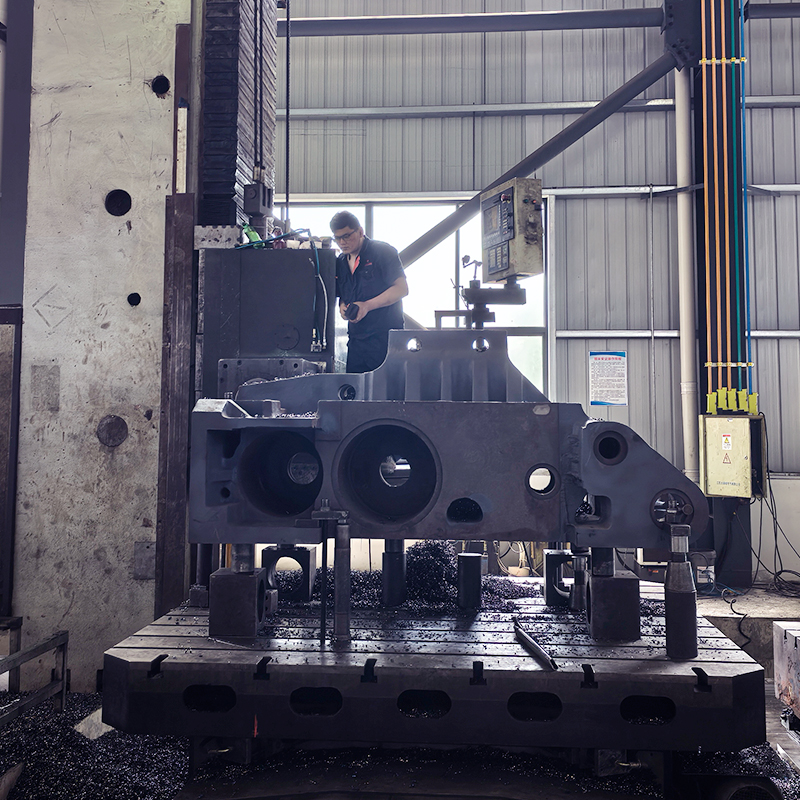
Tight tolerances often dictate mandatory post-process machining. This adds cycle time, fixturing expenses, and labor to the unit expense. Critical mating surfaces must be perfectly flat and dimensionally precise. CNC Machined Transmission Housing Castings serve as a prime example of this requirement. The internal bearing journals and mounting faces require exact dimensions. Secondary machining expenses heavily impact the final financial calculation of the component. Minimizing machined features during the design phase is critical for cost control. Design for manufacturability reduces reliance on expensive secondary subtractive operations. We design custom hydraulic fixtures to hold the raw castings inside horizontal machining centers. The CNC mills face off the mounting pads and drill and tap the threaded holes. Every minute the part sits in the CNC machine adds direct cost to the bottom line.
Common defects vary significantly between the two manufacturing processes. Molten metal injection struggles with internal porosity and cold shuts. Stamping faces challenges with material springback, excessive thinning, and edge tearing. Defect rates directly impact scrap expenses and overall material yield. Non-destructive testing is required for critical automotive structural components. X-ray inspection detects internal porosity in thick-walled cast parts. These stringent quality control measures add to the operational expenses. Mitigating defects early in production saves significant capital and prevents recalls. Robust process control parameters are non-negotiable for automotive suppliers. We section parts on the floor and check them under microscopes. We use coordinate measuring machines to verify geometric dimensioning and tolerancing. If a stamping press operator fails to lubricate the coil properly, the die will gall, and you will tear the metal.
Tooling lead times represent a significant opportunity expense for new vehicle launches. Molds typically take much longer to manufacture and validate than stamping dies. Complex cavity machining, EDM processing, and thermal treatments extend the timeline. Validation phases require multiple sampling iterations to achieve perfect dimensions. Rapid prototyping mitigates risks during the critical validation phase. Soft tooling allows for physical testing before committing to hard steel production molds. These strategies prevent costly tooling rework and disastrous production delays. Factoring lead times into your product launch schedule is essential for success. We run a full Production Part Approval Process before shipping any production volume. You have to prove the process is stable and capable of running at the quoted rate. Rushing the tool build always results in poor part quality and broken dies on the floor.
Conduct a rigorous Design for Manufacturability review with your engineering team to identify part consolidation opportunities.
Request detailed quotes from suppliers that clearly separate tooling amortization from raw unit expenses.
Calculate your exact volume break-even point before committing capital to either manufacturing process.
Evaluate all secondary machining and surface finishing needs to ensure accurate lifecycle expense forecasting.
Assess your project lead time constraints to determine if mold fabrication fits your vehicle launch schedule.
A: Stamping dies generally require a lower initial investment, especially for simple 2D profiles. Hardened steel injection molds demand a significantly higher upfront capital expenditure due to complex cavity machining, water lines, and thermal requirements. The exact difference depends heavily on part complexity, size, and the number of progressive stations required.
A: Compound dies perform multiple cuts or bends in a single stroke at one station, making them ideal for flat, moderately complex parts. Progressive dies move the metal strip through multiple sequential stations. This makes them perfect for high-volume, complex geometries that require progressive forming, piercing, and blanking.
A: The break-even point varies based on part complexity and consolidation potential. Generally, high-volume production runs exceeding hundreds of thousands of units justify the high initial tooling investment. The process achieves this through significantly lower per-unit expenses, faster cycle times, and reduced downstream assembly labor.
A: No. Engine components typically require variable wall thicknesses, complex internal cooling channels, and massive structural rigidity. Stamping is limited to uniform sheet metal thicknesses. It cannot replicate the intricate 3D geometries, thick mounting bosses, or thermal mass required for engine blocks or transmission housings.
A: Secondary machining adds labor, machine time, and fixturing expenses to the base unit. If a part requires extensive CNC milling to achieve tight tolerances on mating surfaces or bearing journals, these secondary operations can sometimes exceed the initial casting expense. Minimizing machined features is critical.
A: Casting generally offers better material utilization because runners, sprues, and flash can be melted down and recycled in-house immediately. Stamping generates unavoidable sheet metal offcuts and skeleton scrap. You must sell this scrap to recyclers at a depreciated value, resulting in higher net material waste.


