
Views: 0 Author: Site Editor Publish Time: 2026-10-14 Origin: Site


The global automotive sector's rapid transition toward lightweighting and electrification depends heavily on the massive aluminum and zinc die casting infrastructure located in China. Sourcing managers face distinct challenges when trying to separate true Tier-1 and Tier-2 automotive foundries from lower-tier commercial casters or trading companies that mask themselves as actual manufacturers. Choosing the wrong manufacturing partner directly leads to high scrap rates, severe tooling disputes, and crippling supply chain bottlenecks. You need a reliable method to vet these suppliers before committing capital. This guide provides an evidence-based framework for evaluating top Chinese Automotive Die Casting Companies. We analyze their technical capabilities, regional manufacturing specializations, and proven strategies for mitigating offshore production risks.
Certification is the Baseline: Only shortlist manufacturers holding active, verifiable IATF 16949 certifications and relevant export compliance (e.g., CE Marking for the European market).
NEV Capability is the New Standard: The ability to produce large-scale New Energy Vehicle Die Casting Components (like battery housings) indicates a manufacturer's investment in ultra-high-tonnage machinery (gigacasting) and advanced vacuum casting technologies.
Material Versatility: Top-tier foundries demonstrate distinct, optimized workflows for both aluminum (lightweighting, structural integrity) and zinc (high-precision, complex geometries) die casting.
Tooling Ownership is Critical: Upfront clarity on mold ownership, maintenance schedules, and IP protection prevents vendor lock-in and hidden costs.
Secondary Operations Matter: Foundries with in-house CNC machining and surface finishing offer better quality control and faster lead times than those outsourcing these critical final steps.
Automotive manufacturing requires strict process controls and zero-defect tolerances. When you evaluate foundries, IATF 16949 certification acts as the absolute minimum baseline. This standard forces the facility to operate with continuous improvement protocols, defect prevention strategies, and reduced variation across the supply chain. ISO 14001 compliance shows responsible environmental management, a metric increasingly mandated by global OEMs. For components shipping to European assembly lines, you must verify the manufacturer's capability to meet CE Marking requirements.
Do not just look at certificates on a wall. Assess the practical, daily implementation of Advanced Product Quality Planning (APQP) and the Production Part Approval Process (PPAP). These frameworks prove the supplier understands your engineering design specifications and maintains a repeatable manufacturing process. Walk the floor and evaluate their in-house metrology laboratories. A competent automotive caster must operate Coordinate Measuring Machines (CMM) for dimensional verification, X-ray inspection equipment to detect internal shrinkage porosity, and optical emission spectrometers to verify alloy composition before pouring any metal.
The structural integrity and dimensional accuracy of a die-cast part depend entirely on the quality of its mold. During the Design for Manufacturability (DFM) phase, top-tier manufacturers run advanced mold flow analysis software, such as Magmasoft or AnyCasting. These simulation tools map thermal dynamics, metal flow velocities, and solidification patterns. They allow engineers to predict and eliminate defects like cold shuts, soldering, or air entrapment before cutting a single block of steel.
You must establish clear contractual expectations regarding die lifespan. High-quality H13 tool steel dies, heat-treated to NADCA 207 standards, should come with guaranteed shot lives. Expect 80,000 to 100,000 shots for aluminum, depending on part complexity and alloy aggressiveness. Evaluate the foundry's internal tool room capabilities using these criteria:
Availability of multi-axis CNC mills and EDM machines dedicated solely to mold repair.
Documented preventative maintenance schedules based on actual shot counts.
In-house thermal stress relieving capabilities to prevent heat checking on the die surface.
Dedicated polishing stations to maintain draft angles and surface finish requirements.
Matching your component's size, weight, and geometric complexity to the manufacturer's machine park prevents excessive flash and dimensional warping. A diverse range of locking forces indicates a versatile, well-capitalized supplier. The emergence of gigacasting for massive structural components requires specialized facilities equipped with massive infrastructure.
Machine Tonnage | Typical Automotive Components | Automation Level Required | Cycle Time Expectation |
|---|---|---|---|
200T - 400T | Sensor housings, small brackets, interior trim | Standard (Robotic extraction) | Fast (15 - 30 seconds) |
600T - 1000T | Water pumps, oil pump housings, steering columns | High (Auto-ladling, spraying) | Medium (40 - 70 seconds) |
1200T - 2500T | Transmission cases, engine blocks, subframes | Full Cell (Vacuum assist, thermal control) | Slow (80 - 120 seconds) |
3500T - 7000T+ | Battery enclosures, gigacast front/rear underbodies | Ultra-High (Integrated quenching, trimming) | Very Slow (120+ seconds) |
Automation levels directly dictate cycle time consistency and defect rates. Look for production cells equipped with robotic ladling, automated die spraying, and robotic part extraction. Manual operations introduce severe thermal variations into the die casting cycle. Automated spraying ensures consistent release agent application, maintaining optimal die temperatures and extending tool life while preventing surface blistering.
Foundries specialize in specific metal families due to vastly different thermal requirements and handling procedures. Evaluate their handling of aluminum alloys, such as ADC12, A380, or A356. Aluminum provides the high strength-to-weight ratio necessary for chassis components, engine blocks, and structural lightweighting initiatives. Assess their molten metal treatment processes. Look for rotary degassing and fluxing stations, which remove dissolved hydrogen and oxides to improve the final mechanical properties of the casting.
For components requiring extreme precision, thinner walls, and superior plating characteristics, zinc alloys like the Zamak series dominate. Zinc casts at much lower temperatures, extending die life significantly and allowing for intricate geometries with minimal draft angles. Assess the foundry's hot-chamber die casting capabilities. Hot-chamber machines achieve the tight tolerances required for interior trim, electronic housings, and complex mechanical assemblies that aluminum cold-chamber machines simply cannot match.
The upper echelon of China's die casting industry consists of mega-foundries and integrated conglomerates capable of supporting massive global supply chains. Companies like BYD Company Limited and Foxconn Technology Group operate highly automated, high-volume facilities. Their operations focus heavily on large-scale structural components and electric vehicle integration. These giants fit best with massive OEM contracts where scale, vertical integration, and aggressive production ramps take priority over low minimum order quantities.
State-backed enterprises and heavy industry giants also dominate this space. China Aluminum Corporation (Chalco), China FAW Group, SAIC Motor, and COSCO Shipyard Group possess immense industrial casting infrastructure. They offer extensive vertical integration, controlling everything from raw material smelting and alloying to final component assembly. Legacy automotive giants like Wanxiang Group and Weichai Power bring decades of deep, specialized expertise in heavy-duty commercial vehicle and complex powertrain casting.
Beyond the mega-foundries, China features distinct regional hubs specializing in precision automotive components. The Ningbo region, specifically the Beilun district, operates as the die casting mold capital of China. This geographic concentration of raw material suppliers, toolmakers, and surface finishers allows Ningbo-based casters to offer highly competitive manufacturing for mid-to-high volume aluminum components.
The Shanghai and Fujian hubs operate as emerging centers for advanced manufacturing. These facilities integrate primary die-casting operations with high-end, multi-axis CNC machining, catering to clients with strict export compliance standards. Further south, Dongguan and Shenzhen facilities specialize in high-precision, complex geometries. They leverage the region's electronics manufacturing heritage to deliver superior surface finishing, serving both domestic electric vehicle markets and high-efficiency export demands.
The transition to electric mobility demands structural components that are large, thin-walled, and capable of integrating multiple functions into a single casting. The primary success criterion for these parts is the ability to cast large surface areas without warping or dimensional distortion. Manufacturers must demonstrate mastery over thermal management within massive dies to ensure even solidification across varying wall thicknesses.
When evaluating suppliers for these parts, focus on their expertise in high-vacuum die casting. Standard die casting traps air inside the metal, causing severe blistering if the part undergoes high-temperature T6 heat treatment or welding. Vacuum systems evacuate air from the die cavity milliseconds before the metal injection, resulting in dense, weldable, and heat-treatable structural parts. Common applications requiring this level of technology include battery enclosures, shock tower mounts, and motor housings. Sourcing reliable New Energy Vehicle Die Casting Components requires verifying these specific vacuum and heat-treatment capabilities on the factory floor.
Powertrain components operate under high stress, extreme temperatures, and constant fluid pressure. The critical success criteria here are strict control over internal porosity and absolute pressure tightness. Even microscopic internal voids lead to fluid leaks or catastrophic mechanical failure under operational loads. Foundries must utilize advanced gating designs and localized squeeze pins to feed molten metal into thick sections during solidification, preventing shrinkage porosity.
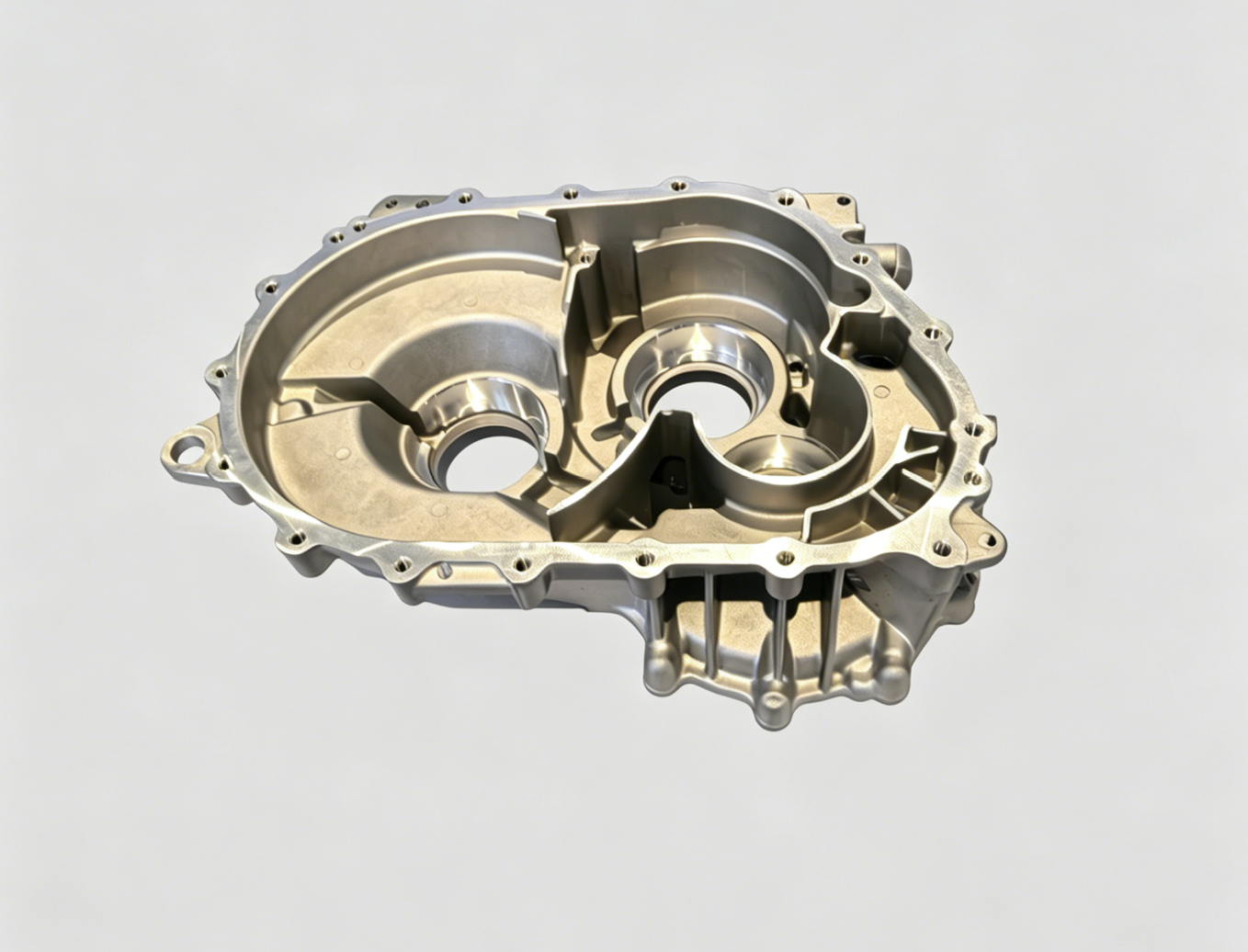
Post-casting secondary operations carry equal weight. The capability to execute precision CNC machining in-house ensures that mating surfaces achieve the tight geometric tolerances required for gaskets and seals. Look for facilities utilizing multi-pallet horizontal machining centers for efficient, high-precision metal removal. Common applications include transmission cases, water pump housings, and Automotive Engine Oil Pump Housing Die Casting, where dimensional stability directly impacts engine performance and longevity.
Interior trim, exterior door handles, and visible sensor housings require flawless visual appearance and robust resistance to environmental corrosion. The success criteria for cosmetic parts revolve around surface integrity straight out of the mold. Any surface defects, such as flow marks, cold shuts, or blistering, magnify during subsequent plating or painting processes, leading to immediate rejection.
Evaluate the manufacturer's mastery of die temperature control and their use of advanced release agents. Precise thermal management prevents premature metal solidification, ensuring the alloy fills intricate details seamlessly. Foundries excelling in this area produce Smooth Surface Automotive Precision Castings that require minimal manual polishing before undergoing copper-nickel-chrome plating, powder coating, or anodizing. Their quality control processes must include rigorous visual inspections under standardized lighting and salt spray testing to verify long-term corrosion resistance.
A common risk when sourcing offshore is the ambiguity surrounding mold ownership. Some foundries subsidize the initial piece price by retaining ownership of the tooling. This creates severe vendor lock-in. If quality drops or production delays occur, moving production to another facility becomes impossible without investing in entirely new molds. Furthermore, unprotected CAD designs easily leak to competitors.
Mitigate these risks before sharing any technical drawings. Draft explicit NNN (Non-Disclosure, Non-Use, Non-Circumvention) agreements that are legally enforceable within Chinese jurisdictions. Ensure that tooling invoices remain completely separate from part production invoices. The commercial contract must state your absolute ownership of the molds, including the right to physically remove them from the supplier's facility at any time without penalty.
Many sourcing managers experience a phenomenon where the initial golden sample perfectly passes the PPAP requirements, but mass production quality gradually degrades over subsequent months. This quality fade typically results from inadequate tool maintenance, the unauthorized substitution of cheaper secondary alloys, or the skipping of critical secondary processes like deburring or thermal stress relief.
Combat defect rate creep by implementing strict, continuous verification protocols. Schedule routine third-party pre-shipment inspections (PSI) randomly. Contractually require the foundry to provide comprehensive material certificates, spectrometer readouts, and X-ray inspection reports with every single production batch. Maintaining a presence on the factory floor, either through your own engineers or trusted third-party auditors, ensures the approved manufacturing process remains unaltered.
Selecting a vendor based solely on the lowest initial manufacturing quote often leads to disrupted assembly lines and inflated operational expenses. A low EXW (Ex Works) piece price ignores the broader realities of international logistics, high scrap rates upon delivery, and the engineering hours lost to communication delays and time-zone differences.
Calculate the comprehensive operational impact of your sourcing decision. Factor in ocean freight volatility, import tariffs, and inland transportation. Account for the buffer inventory required to offset longer lead times and potential port delays. Evaluate the supplier's English-speaking engineering support and their responsiveness to technical queries. A slightly higher piece price from a highly communicative, reliable foundry often results in a vastly more stable and efficient supply chain.
Initiate the RFQ process by requesting a DFM review on a legacy part to test the manufacturer's engineering responsiveness and technical competence before awarding new business.
Verify active IATF 16949 and ISO 14001 certificates directly with the issuing certification bodies to ensure authenticity and scope of compliance.
Draft and execute explicit, China-enforceable NNN agreements before sharing any proprietary CAD files or technical specifications with potential suppliers.
Require detailed mold flow analysis reports and explicit tooling ownership clauses in the commercial contract before authorizing tooling kick-off and transferring funds.
A: Standard lead times for automotive die casting molds range from 4 to 8 weeks, depending on part complexity and die size. Simple brackets take about 4 weeks. Complex engine blocks or transmission housings requiring multi-slide actions take 8 to 10 weeks. This timeframe includes design, machining, heat treatment, and the initial T0 sample run.
A: Reputable IATF 16949-certified foundries handle PPAP by providing comprehensive documentation packages. This includes process flow diagrams, FMEA, control plans, dimensional inspection results, material certifications, and initial process capability studies (Cpk/Ppk). They submit these documents alongside the master samples for OEM approval before mass production begins.
A: MOQs vary significantly by foundry size and machine tonnage. Specialized regional casters accept MOQs as low as 1,000 to 3,000 pieces per run for smaller components. Tier-1 mega-foundries require much higher volumes, often starting at 10,000 pieces, to justify the setup times on highly automated, large-tonnage production cells.
A: Require the foundry to provide a chemical composition report generated by an optical emission spectrometer for every batch of metal poured. Periodically send production samples to an independent, accredited third-party laboratory for destructive testing and chemical analysis to ensure the alloy matches the specified grade.
A: Yes, leading Chinese die casting companies operate at the forefront of gigacasting technology. Several Tier-1 foundries and integrated OEMs run massive presses ranging from 6000T to 9000T+. These facilities routinely produce large, consolidated structural components like front and rear underbodies and battery enclosures for the global electric vehicle market.
A: Top-tier foundries maintain dedicated in-house tool rooms equipped with CNC mills, EDM machines, and polishing stations. They implement strict preventative maintenance schedules based on shot counts, which include cleaning, stress relieving, and replacing worn core pins. In-house maintenance minimizes production downtime and extends the overall lifespan of the die.
A: Yes, export-oriented foundries possess deep experience complying with European market regulations. While raw die-cast components often do not require standalone CE Marking, the foundries provide the necessary material traceability, RoHS compliance certificates, and quality documentation required for the final automotive assembly to achieve CE certification.


