
Views: 0 Author: Site Editor Publish Time: 2026-09-02 Origin: Site


The shift toward electric vehicles and stricter global emissions standards forces automotive engineers to aggressively cut vehicle mass. Heavy battery packs compromise suspension dynamics and driving range, while internal combustion engines require lighter chassis structures to meet mandatory fuel economy targets. You cannot sacrifice structural integrity, crashworthiness, or production cycle times to hit these weight goals. Advanced die casting provides a repeatable, highly scalable method to solve this engineering bottleneck. By replacing heavy steel and cast iron with optimized aluminum and magnesium alloys, manufacturers consolidate complex, multi-part assemblies into single-piece structures. This guide evaluates how transitioning to die-cast alloys hits aggressive weight reduction targets, compares high-pressure and low-pressure casting mechanics, and outlines the technical criteria for selecting capable manufacturing partners.
Transitioning from traditional steel or cast iron to aluminum and magnesium die casting can yield component mass reductions of 30% to 50% while maintaining required tensile strength.
Advanced die casting techniques improve mechanical and fatigue properties, allowing engineers to safely reduce section thicknesses and strip away excess material weight.
Process selection—specifically choosing between High-Pressure Die Casting (HPDC) and Low-Pressure Die Casting (LPDC)—directly dictates the balance of production speed, porosity limits, and fatigue resistance.
Achieving final functional tolerances requires integrating secondary operations; utilizing CNC machined transmission housing castings ensures precise fluid routing and gear alignment without adding weight.
The adoption of specialized New Energy Vehicle die casting components is critical for optimizing thermal management and extending battery range in modern EV architectures.
Automotive engineering operates under severe regulatory frameworks and shifting performance benchmarks. CAFE standards in North America and Euro 7 emissions regulations in Europe impose strict penalties on vehicle platforms that fail to meet efficiency thresholds. Simultaneously, the rapid adoption of electric vehicle architectures introduces a massive weight penalty. Standard lithium-ion battery packs add between 400 and 700 kilograms to a vehicle's curb weight. This added mass directly impacts suspension dynamics, increases braking distances, and accelerates tire wear. To maintain acceptable vehicle dynamics and meet regulatory standards, engineers must aggressively strip weight from the chassis, powertrain, and structural nodes.
The correlation between mass reduction and vehicle performance is highly predictable. In traditional internal combustion engine vehicles, a 10% reduction in total vehicle weight typically yields a 6% to 8% improvement in fuel economy. For electric vehicles, this mass reduction translates directly into extended driving range and improved battery efficiency. Lighter vehicles require less kinetic energy to accelerate and generate less inertia during deceleration. This allows you to specify smaller, lighter braking systems and suspension components, creating a compounding effect where initial weight savings enable secondary weight reductions across the entire platform.
Replacing legacy materials with lightweight alternatives requires meeting strict engineering criteria. You cannot simply focus on mass reduction; the new parts must match or exceed the performance of the original components. Engineers evaluate replacement materials based on several critical factors:
Fatigue Resistance: Components like suspension knuckles must withstand millions of cyclic load cycles without developing micro-fractures.
Thermal Conductivity: Engine blocks and battery housings must dissipate heat rapidly while resisting thermal distortion under heavy loads.
NVH Dampening: Structural nodes must absorb Noise, Vibration, and Harshness to maintain cabin comfort.
Dimensional Stability: Parts must retain their exact shape and tolerance over years of exposure to extreme temperature fluctuations and road debris.
Traditional fabrication methods fail to meet these modern requirements efficiently. Multi-part stamped steel assemblies are inherently heavy and require labor-intensive robotic welding processes. Each spot weld introduces a potential failure point, creates localized heat-affected zones that alter the steel's grain structure, and adds dimensional variation to the final assembly. Advanced casting techniques allow for the consolidation of dozens of stamped components into a single, optimized structure. This eliminates weld-related fatigue points, tightens overall dimensional tolerances, and significantly reduces the footprint of the assembly line.
Selecting the correct casting process dictates the internal structure of the metal, the minimum achievable wall thickness, and the presence of gas porosity. Engineers must balance production cycle times against structural requirements when specifying a casting method for lightweight components.
High-Pressure Die Casting (HPDC) injects molten metal into a hardened steel mold cavity at extremely high speeds and pressures. The injection process occurs in three distinct phases: a slow shot to move metal past the pour hole, a fast shot to fill the cavity in milliseconds, and an intensification phase that applies massive pressure (often exceeding 100 MPa) to feed shrinkage as the metal solidifies. This process achieves rapid cycle times and casts extremely thin wall sections, often down to 2.0mm depending on the alloy. The rapid solidification against the cold die walls creates a fine-grained outer skin that exhibits excellent mechanical properties. Advanced HPDC technologies, including vacuum-assisted casting, evacuate air from the die cavity before the shot. This minimizes gas entrapment, allowing engineers to reduce section thicknesses further to maximize weight savings.
Low-Pressure Die Casting (LPDC) operates on a completely different principle. It uses low-pressure gas (typically under 1 bar) to slowly force molten metal up through a riser tube into the die cavity. This slow, controlled filling process minimizes turbulence and prevents the entrapment of air and oxide films. LPDC produces components with exceptionally low internal porosity and high structural integrity. While cycle times are slower than HPDC, LPDC is highly suitable for thick-walled, load-bearing chassis components, suspension control arms, and wheels that require subsequent T6 heat treatment to achieve maximum yield strength.
Process Feature | High-Pressure Die Casting (HPDC) | Low-Pressure Die Casting (LPDC) |
|---|---|---|
Injection Speed & Pressure | High speed, high pressure (up to 100+ MPa) | Low speed, low pressure (typically < 1 bar) |
Minimum Wall Thickness | Excellent for thin walls (1.5mm - 2.5mm) | Better suited for thicker sections (> 3.0mm) |
Internal Porosity | Higher risk of gas entrapment (unless vacuum-assisted) | Very low porosity due to controlled, non-turbulent fill |
Heat Treatability | Generally not recommended (blistering risk) | Highly suitable for T6 heat treatments |
Typical Automotive Applications | Transmission housings, engine blocks, brackets | Suspension components, wheels, structural nodes |
The density-to-strength ratio of the selected alloy determines the baseline weight of the final component. Aluminum alloys, particularly the A380 and A356 series, dominate the automotive sector due to their optimal balance of castability, mechanical strength, and corrosion resistance. A380 contains higher silicon levels, which increases fluidity during the injection phase, making it ideal for complex geometries. Utilizing Custom Aluminum Automotive Die Casting Parts allows engineers to replace heavy cast iron components while maintaining excellent thermal conductivity. This makes aluminum the industry standard for engine blocks, cylinder heads, and heat exchangers.
Magnesium offers even greater weight reduction potential. It boasts a density approximately 33% lower than aluminum and 75% lower than steel. Magnesium alloys, such as AM60 and AZ91D, are frequently specified for ultra-lightweight interior applications where corrosion exposure is minimal. Common applications include steering wheel armatures, seat frames, and cross-car beams. The high fluidity of molten magnesium allows for the casting of large, complex shapes with incredibly thin walls. However, magnesium requires specialized melting and handling procedures on the foundry floor to prevent oxidation.
Zinc alloys, while denser than both aluminum and magnesium, still play a strategic role in automotive lightweighting. Zinc possesses superior castability, allowing it to be formed with exceptionally tight tolerances and ultra-thin walls that other metals cannot achieve without tearing. For high-precision, under-the-hood components like sensor housings, seatbelt retractor spools, and intricate fluid routing modules, the ability to cast net-shape parts with minimal material volume often results in a net weight reduction compared to bulkier aluminum or machined steel alternatives.
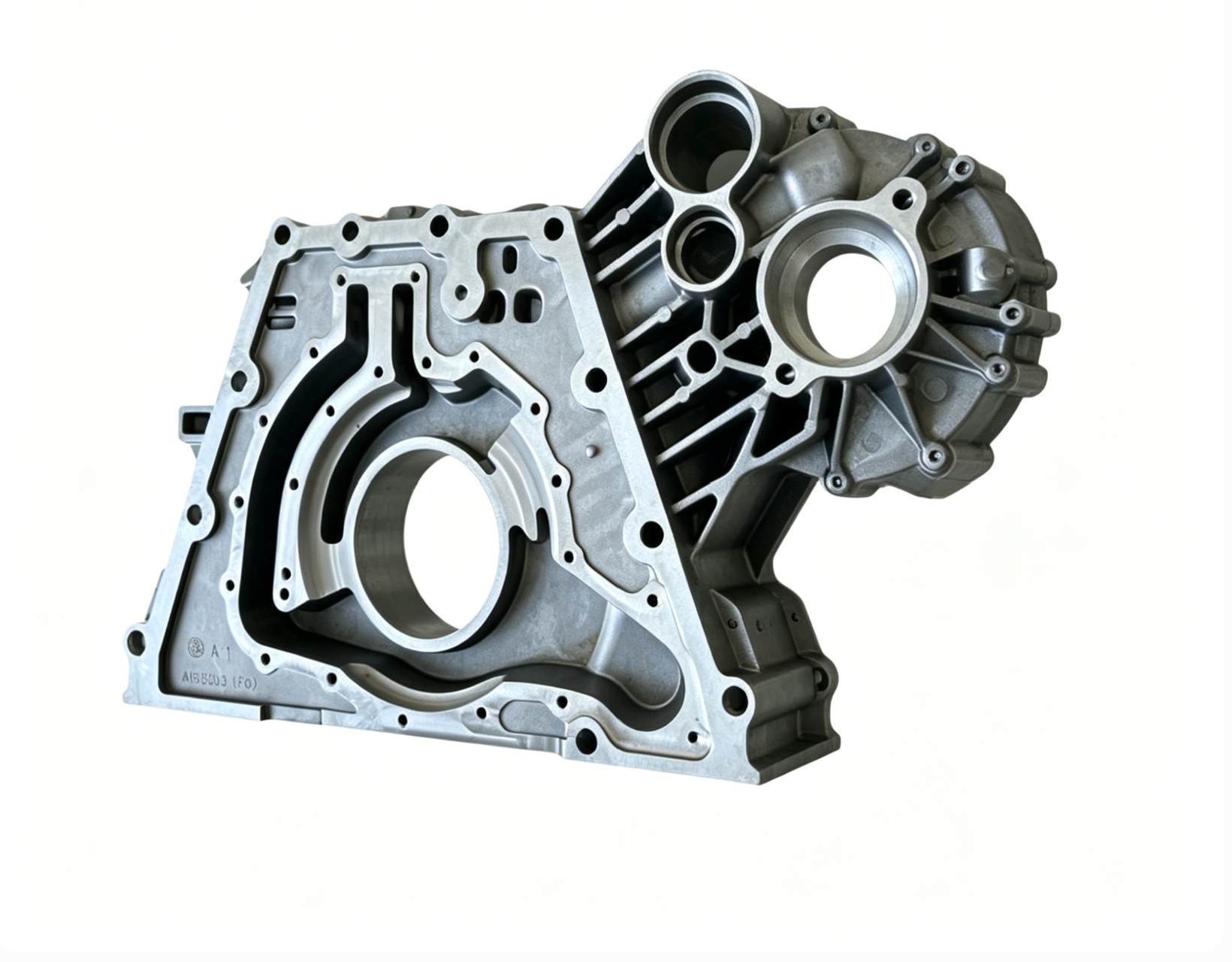
The transition to lightweight cast alloys yields the most significant results when applied to large, complex assemblies or heavy powertrain components. By analyzing specific vehicle subsystems, engineering teams identify areas where material substitution and part consolidation provide the highest impact for mass reduction.
The historical shift from cast iron to aluminum in engine blocks represented the first major wave of automotive lightweighting. Today, that optimization extends throughout the entire drivetrain. The inherent precision of the casting process minimizes the initial material envelope, reducing the amount of raw metal required to form the base structure. However, powertrain components require exact bearing fits, perfectly flat mating surfaces, and leak-proof fluid channels.
This is where the integration of secondary machining becomes critical. Specifying CNC Machined Transmission Housing Castings ensures that the lightweight aluminum structure meets the exacting dimensional requirements of modern multi-speed gearboxes. Near-net-shape casting establishes the complex internal geometries and fluid routing channels. Targeted CNC machining—utilizing multi-axis mills and precision boring bars—achieves the final tight tolerances required for gear alignment and seal integrity. Machinists rely on specific datum structures cast directly into the housing to ensure true position tolerances are held across the entire part. This combined approach delivers a robust, high-performance drivetrain component at a fraction of the weight of legacy cast iron assemblies.
The most aggressive weight reduction strategies currently involve the implementation of mega-casting or giga-casting. This manufacturing philosophy utilizes massive high-pressure die casting machines, often exceeding 6,000 to 9,000 tons of clamping force, to cast entire vehicle subframes as a single piece of aluminum. A single rear underbody giga-casting can replace upwards of 70 individual stamped steel parts, brackets, and fasteners.
The outcomes of chassis consolidation are profound. Assembly weight drops significantly due to the elimination of overlapping steel flanges and heavy structural adhesives. The single-piece cast node eliminates dozens of spot welds and seam welds, removing potential fatigue failure points and improving the overall torsional rigidity of the vehicle platform. This consolidation drastically streamlines the manufacturing line, reducing the footprint of the body shop and simplifying supply chain logistics. Engineers can optimize the wall thickness of the giga-casting in specific high-stress zones while thinning out non-load-bearing areas, maximizing material efficiency.
Electric vehicle architectures present unique thermal and structural challenges that require specialized casting solutions. The adoption of New Energy Vehicle Die Casting Components is critical for managing battery temperatures and protecting high-voltage electronics. Battery enclosures are increasingly transitioning from heavy steel fabrications to extruded and die-cast aluminum assemblies. These cast enclosures provide the necessary crash protection for the battery cells while integrating complex cooling channels directly into the floor structure.
Stator housings and integrated thermal management modules also benefit heavily from aluminum casting. Electric motors generate significant heat under heavy acceleration, and cast aluminum housings offer the thermal conductivity required to dissipate that heat efficiently. Water jackets can be cast directly into the motor housing using specialized sand cores or slide mechanisms in the die. By lightweighting these specific EV components, engineers directly offset the mass of the battery pack. This improves the vehicle's overall energy density metrics, reduces the load on the suspension system, and ultimately extends the functional driving range of the vehicle.
Transitioning from traditional fabrication to high-volume casting requires a thorough evaluation of production scalability and strict adherence to automotive quality standards. The manufacturing process must support high production volumes without degrading part quality or dimensional accuracy over time.
The hardened steel molds and dies used in HPDC are engineered for extreme durability. A well-designed HPDC die, constructed from premium H13 tool steel and properly maintained with thermal management systems, can produce hundreds of thousands of shots before requiring major refurbishment. The rapid cycle times of the casting process allow manufacturers to meet aggressive production schedules that would be impossible with slower fabrication methods. Automated ladles, robotic part extraction, and automated die spray systems further increase cycle efficiency and ensure consistent thermal conditions within the die cavity.
The scalability of casting is heavily enhanced by part consolidation. When a single cast component replaces a multi-part welded assembly, the manufacturer eliminates the need for multiple stamping dies, welding fixtures, and assembly stations. This reduction in downstream assembly requirements simplifies the manufacturing process, reduces the risk of line stoppages, and lowers overall logistical complexity. You manage one part number instead of fifty. The efficiency gained through consolidation makes die casting a highly scalable solution for global vehicle platforms.
Automotive lightweighting cannot compromise safety or reliability. Structural components and powertrain housings must meet rigorous industry standards for crashworthiness and fatigue life. OEMs must partner with foundries that maintain strict quality management systems, evidenced by IATF 16949 certification. This certification ensures that the supplier adheres to standardized processes for defect prevention, continuous improvement, and supply chain management.
Verifying the internal integrity of lightweight castings requires advanced non-destructive testing (NDT) methodologies. Because internal porosity can compromise the tensile strength of a thin-walled component, foundries utilize industrial X-ray and Computed Tomography (CT) scanning to inspect parts before they leave the facility. CT scanning provides a three-dimensional view of the casting's internal structure, allowing quality engineers to detect microscopic shrinkage voids or gas pockets down to specific micron resolutions. If a void is detected in a critical load path, the part is scrapped. Only parts that pass these stringent NDT protocols are approved for integration into the vehicle chassis.
While the benefits of lightweight casting are clear, the transition involves specific engineering and supply chain risks. Identifying these roadblocks early in the vehicle development cycle allows engineering teams to implement effective mitigation strategies and ensure a smooth launch.
The most significant technical risk in high-pressure die casting is the formation of entrapped gas and shrinkage porosity. When molten metal is injected into a die at high speeds, turbulent flow can trap air within the cavity. As the metal cools and shrinks, microscopic voids form. In load-bearing structural parts, this porosity acts as a stress concentrator, severely reducing the mechanical properties and fatigue life of the lightweight component.
To mitigate this risk, engineers specify advanced casting techniques and rigorous simulation protocols. Vacuum-assisted die casting is highly recommended for structural nodes. This system uses vacuum valves and chill blocks to evacuate the die cavity prior to injection, drastically reducing gas entrapment. During the Design for Manufacturability (DFM) phase, engineers utilize advanced flow and thermal simulation software to model the injection process. This allows them to optimize gate locations, cooling channel placement, and overflow designs before cutting any steel for the tooling. For the most critical structural nodes, squeeze casting or semi-solid casting techniques may be specified to eliminate porosity entirely by applying massive pressure during the solidification phase.
The production of complex, large-format castings introduces significant supply chain risks. Relying on single-source foundries for critical giga-castings can create production bottlenecks. Fragmented supply chains—where casting occurs at one facility and precision machining occurs at another—increase logistical complexity, extend lead times, and complicate quality control accountability. If a machined casting fails a dimensional inspection, the machine shop may blame the foundry for datum shift, while the foundry blames the machine shop for fixture deflection.
To mitigate sourcing complexities, OEMs shortlist Tier 1 suppliers that offer vertically integrated manufacturing services. A vertically integrated partner manages the entire process under one roof, combining in-house tooling design, casting production, and precision CNC machining. This consolidated approach ensures strict quality control from the raw aluminum ingot to the final machined tolerance. It reduces transportation delays and provides a single point of accountability for the final component, significantly streamlining the procurement and validation process.
The integration of automotive die casting remains the most viable, scalable pathway for OEMs to achieve aggressive vehicle weight reduction targets. By transitioning from heavy legacy metals to optimized aluminum and magnesium alloys, engineers significantly improve ICE fuel economy and offset the mass of EV battery packs without sacrificing structural performance or crashworthiness.
When evaluating casting partners for upcoming vehicle platforms, prioritize foundries that demonstrate proven expertise in advanced alloy selection, porosity mitigation techniques, section thickness optimization, and integrated secondary machining capabilities. A capable partner provides the technical guidance necessary to push the boundaries of lightweight design.
To initiate a successful lightweighting strategy, execute the following next steps:
Conduct a comprehensive part-consolidation audit on existing legacy assemblies to identify immediate opportunities for multi-part replacement.
Request a detailed Design for Manufacturability (DFM) review for upcoming chassis and powertrain platforms to optimize wall thicknesses and gate locations.
Evaluate advanced alloy alternatives, comparing the yield strength and thermal conductivity of various aluminum and magnesium grades against baseline requirements.
Audit potential supply chain partners for vertical integration capabilities, ensuring they possess both high-tonnage casting equipment and precision CNC machining centers.
A: Replacing traditional cast iron or stamped steel components with aluminum die casting typically yields a mass reduction of 30% to 50%. The exact weight savings depend on the specific alloy selected, the complexity of the part, and the ability to optimize wall thicknesses through advanced casting techniques.
A: Reducing section thickness directly lowers the component's mass, which improves overall vehicle fuel efficiency and EV range. Structural integrity is maintained by utilizing advanced high-pressure die casting techniques that create a dense, fine-grained outer skin, ensuring the thinner walls still meet required tensile and yield strength specifications.
A: High-pressure die casting allows for the consolidation of multiple stamped steel parts into a single, complex aluminum structure. This eliminates heavy overlapping flanges and weld points, reducing overall weight, tightening dimensional tolerances, and significantly streamlining the final assembly process.
A: Standard high-pressure die castings are generally not welded or heat-treated due to internal gas porosity, which expands and causes blistering at high temperatures. However, parts produced using vacuum-assisted HPDC or low-pressure die casting exhibit minimal porosity and can be successfully welded and subjected to T6 heat treatments.
A: Die casting produces near-net-shape parts with smoother surface finishes and thinner walls than sand casting, resulting in a lighter base component. Subsequent CNC machining ensures the tight dimensional tolerances required for precise gear alignment, bearing fits, and leak-proof fluid routing that sand casting cannot achieve alone.
A: Cast aluminum components, such as battery enclosures and stator housings, offer excellent thermal conductivity. They efficiently dissipate the intense heat generated by high-voltage batteries and electric motors, maintaining optimal operating temperatures, protecting sensitive electronics, and ultimately extending the vehicle's functional driving range.


