
Views: 0 Author: Site Editor Publish Time: 2026-07-29 Origin: Site


Automotive manufacturers face escalating pressure to hit strict lightweighting and fuel efficiency targets. Electric vehicle range requirements push structural integrity limits further with every new production cycle. Engineers must balance mechanical strength, thermal performance, and manufacturability while maintaining high production volumes. Selecting the optimal alloy means moving past generic material data sheets. You have to evaluate castability, secondary machining needs, environmental resilience, and the specific operating environment of the component. A poor material choice leads to high scrap rates, excessive tool wear, and assembly line bottlenecks. We will break down how to match specific aluminum and magnesium alloys to their ideal automotive applications, ensuring your next production run hits all performance metrics.
A380 remains the baseline standard for most automotive components due to its optimal balance of castability, mechanical properties, and cost-effectiveness, directly contributing to faster production cycles and reduced error rates.
High-wear and high-temperature applications demand hypereutectic alloys like A390 or B390, though they introduce tooling wear trade-offs during secondary machining.
Magnesium alloys (like AZ91D) offer superior lightweighting for structural parts but require strict corrosion mitigation strategies.
Achieving specific outcomes, such as smooth surface automotive precision castings, dictates not only the alloy choice but the required die temperature controls and finishing processes.
You must evaluate multiple performance metrics before locking in a casting alloy. Every material choice involves specific compromises on the shop floor. Understanding these baseline criteria ensures the final component performs reliably under real-world conditions while remaining viable for mass production.
Automotive components endure constant dynamic stress. Parts subjected to continuous friction, like cylinder liners or pump housings, require high hardness levels to survive the vehicle's lifespan. Structural brackets need high yield strength to prevent permanent deformation under heavy torque loads. Tensile strength dictates how much stretching a part can handle before catastrophic failure. Alloys with higher silicon content generally offer better wear resistance because the silicon forms hard microscopic particles within the metal matrix. This makes them highly suitable for internal engine components. Softer alloys might deform or gall under similar mechanical loads.
Modern powertrains generate immense heat. Internal combustion engine components endure extreme thermal cycles that can warp inferior metals. Electronic housings must dissipate heat rapidly to protect sensitive printed circuit boards. EV battery enclosures require excellent thermal conductivity to prevent localized hot spots and thermal runaway. The chosen alloy must maintain its structural integrity and dimensional stability at elevated temperatures. Heat dissipation capabilities directly influence the lifespan of surrounding components, making thermal conductivity a primary selection factor for any under-hood application.
Automotive parts operate in brutally harsh environments. Under-hood components face constant exposure to moisture, synthetic oils, and corrosive coolants. Chassis parts endure direct impacts from road salts, gravel, and debris. The alloy must resist oxidation and galvanic corrosion over the vehicle's entire operational life. Some materials require extensive surface treatments, like e-coating or anodizing, to survive these conditions. Others offer natural resistance due to their specific chemical composition. Evaluating baseline corrosion resistance helps determine the necessary secondary coatings and isolation strategies.
Complex geometries dictate specific material flow requirements. Thin-walled designs, common in modern lightweighting efforts, need alloys with exceptionally high fluidity. The molten metal must flow quickly through intricate die cavities before solidifying. Poor fluidity leads to cold shuts, misruns, and incomplete fills. These defects severely compromise structural integrity and lead to rejected batches. High-fluidity alloys fill molds completely and predictably. This characteristic directly reduces scrap rates, minimizes the need for excessive die heating, and improves overall production efficiency.
Most die-cast parts require secondary operations before final assembly. CNC machining adds precise tolerances for mating surfaces. However, high silicon content increases tool wear significantly during these secondary steps. Abrasive materials act like sandpaper against standard carbide end mills, slowing down production lines and requiring frequent cutting tool replacements. More balanced alloys streamline post-casting work. You must weigh the need for as-cast hardness against the reality of machining efficiency on the factory floor.
Aluminum remains the dominant material for Custom Aluminum Automotive Die Casting Parts. It offers an excellent strength-to-weight ratio and predictable manufacturing characteristics. Different aluminum grades serve distinct automotive functions based on their exact metallurgical makeup. The following alloys represent the core options for modern vehicle manufacturing.
Alloy Grade | Silicon Content | Primary Strength | Machinability | Typical Automotive Application |
|---|---|---|---|---|
A380 | 7.5% - 9.5% | Optimal Balance | Excellent | Transmission housings, engine brackets |
A390 / B390 | 16.0% - 18.0% | Extreme Wear Resistance | Poor (High Tool Wear) | Engine blocks, compressor bodies |
A413 | 11.0% - 13.0% | Pressure Tightness | Good | Hydraulic cylinders, fluid enclosures |
A380 dominates the automotive manufacturing sector. Its chemical composition includes roughly 3% to 4% copper and 7.5% to 9.5% silicon. This specific blend gives A380 unmatched versatility on the production line. The silicon enhances fluidity during the injection process, allowing the metal to navigate complex gating systems. The copper provides substantial mechanical strength and rigidity. This alloy handles complex shapes with ease while maintaining tight tolerances.
Dimensional stability stands out as a key A380 feature. It resists hot cracking during the rapid cooling phase inside the die. This resistance prevents microscopic fractures in complex geometries with varying wall thicknesses. Superior castability directly reduces casting errors and internal porosity. Fewer errors accelerate production cycle times and keep assembly lines moving without interruption.
A380 offers highly favorable machining characteristics. It cuts cleanly during secondary CNC operations, producing manageable chips rather than long, stringy burrs. Tool wear remains predictable. This makes post-casting work highly efficient compared to high-silicon alternatives. Ideal use cases include transmission housings, engine brackets, water pumps, and general structural components. When in doubt, engineers usually start their material evaluation with A380.
A390 and B390 fall into the hypereutectic category. They contain massive amounts of silicon, typically between 16% and 18%. This high silicon content provides exceptional wear resistance. As the molten metal cools, primary silicon crystals precipitate out of the solution. These crystals create a naturally hard, wear-resistant surface matrix. This extreme hardness eliminates the need for heavy cast-iron cylinder liners in specific engine block designs.
These alloys boast specific thermal properties tailored for harsh environments. B390 withstands elevated temperatures without losing structural integrity or warping. This makes it highly suitable for internal combustion engine blocks, air conditioning compressor bodies, and master brake cylinders. It handles the continuous friction of moving pistons and seals exceptionally well.
The primary trade-off involves machinability. The very silicon crystals that provide wear resistance destroy standard cutting tools. Secondary machining requires specialized Polycrystalline Diamond (PCD) tooling. Tool life drops significantly, and feed rates must be reduced to prevent tool breakage. Production speeds during the machining phase slow down considerably. You only specify A390 or B390 when extreme wear resistance is absolutely mandatory for the part's function.
A413 features a silicon content near the eutectic point, hovering between 11% and 13%. This composition gives it a very narrow freezing range. The metal transitions from liquid to solid almost instantly at a specific temperature. This rapid, uniform solidification provides maximum pressure tightness. It prevents the formation of interconnected shrinkage porosity, which is the primary cause of fluid leaks in cast components.
This alloy excels in forming highly intricate, complex geometries. The high fluidity allows it to fill deep, thin-walled die cavities easily without freezing prematurely. A413 also offers superior corrosion resistance compared to A380. It contains less copper, which reduces its susceptibility to galvanic corrosion when exposed to harsh elements. This makes it ideal for exposed environments and marine applications.
Applications requiring leak-proof performance rely heavily on A413. Hydraulic cylinders demand absolute pressure tightness to function safely. Specific fluid enclosures use this alloy to prevent weeping under high internal pressure. If a component must hold pressurized fluids or gases, A413 usually outperforms standard A380 in leak testing.
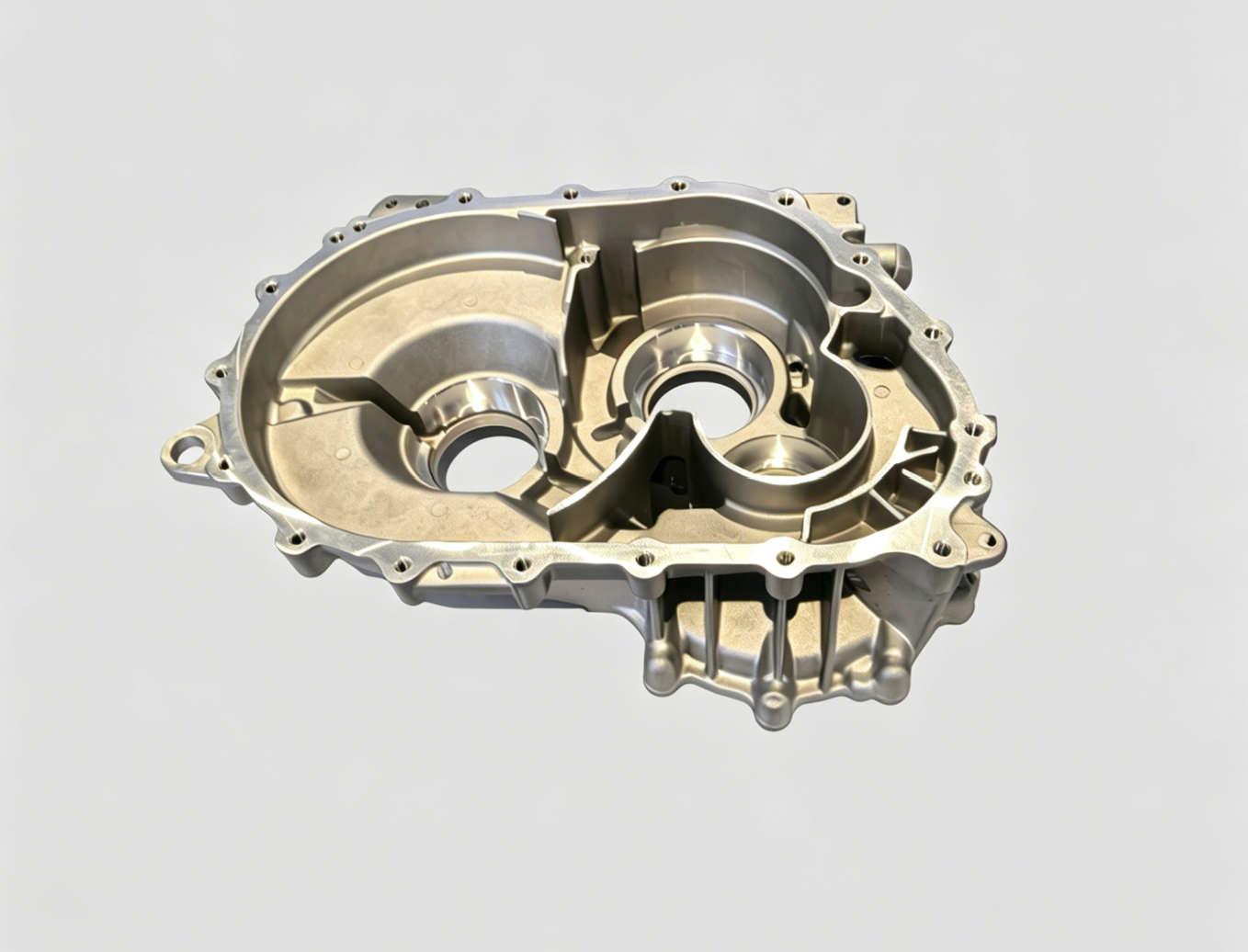
Automakers increasingly turn to magnesium to shed vehicle weight and improve handling dynamics. Magnesium offers distinct advantages over aluminum, primarily in density. However, it requires specialized handling, cover gases during melting, and specific processing techniques to cast safely and effectively.
AZ91D represents the most common magnesium die casting alloy in the automotive sector. Its density is roughly 33% lighter than standard aluminum alloys. This massive weight reduction helps automakers meet strict fuel economy and EV range targets without sacrificing structural volume. Despite its low weight, AZ91D maintains a high strength-to-weight ratio. It handles structural loads effectively and dampens vibration better than aluminum.
This alloy features excellent castability. It fills complex molds rapidly and causes less wear on the steel dies compared to aluminum, extending tooling life. Modern high-purity compositions improve its baseline corrosion resistance. Older magnesium grades suffered heavily from environmental degradation. AZ91D strictly limits heavy metal impurities like iron, copper, and nickel. This purity makes it viable for many automotive applications. Common uses include steering wheel armatures, seat frames, and interior support structures.
AM60B contains lower aluminum content compared to AZ91D, typically featuring around 6% aluminum. This lower aluminum ratio yields higher elongation properties. The material stretches further before fracturing. This enhanced ductility provides superior energy absorption during sudden impacts, making it a critical material for passenger safety.
This alloy plays a critical role in crashworthiness. Safety-critical structural components rely heavily on AM60B. Dashboard supports, front-end crash boxes, and instrument panel beams use this material to absorb crash energy. It deforms predictably rather than shattering into sharp fragments. This predictable deformation protects vehicle occupants during high-speed collisions.
Selecting the right alloy requires matching material properties directly to component functions. Different zones of a vehicle demand entirely different performance characteristics, and applying a one-size-fits-all approach leads to premature part failure.
Powertrain components face high internal pressure, aggressive vibration, and thermal instability. They require materials that maintain tight dimensional tolerances under continuous stress. Fluid management systems must prevent leaks completely. The material must resist chemical degradation from synthetic oils, transmission fluids, and glycol-based coolants.
Consider the strict requirements for Automotive Engine Oil Pump Housing Die Casting. An oil pump housing operates under continuous internal pressure and must maintain perfect flatness on its mating surfaces. It must not leak. If pressure requirements are extreme, engineers specify A413 for its superior pressure tightness and lack of internal porosity. If the design requires extensive secondary machining for complex internal galleries and operates under moderate pressure, A380 provides a better balanced solution. The choice depends entirely on the specific fluid pressure metrics of the engine design.
The rapid shift toward electric vehicles creates entirely new material demands. Battery housings require massive, thin-walled structures that span the entire floorpan of the vehicle. They must provide electromagnetic interference (EMI) shielding to protect sensors. They also need rapid heat dissipation capabilities to manage battery cell temperatures. Thermal runaway presents a massive safety risk in EVs, making thermal management a top priority.
Engineers select high-fluidity, thermally conductive aluminum alloys for these parts. Standard A380 often works, but specialized low-iron alloys sometimes provide better thermal conductivity. The alloy must flow through massive dies on 4000-ton casting machines to form the large battery pack trays without freezing prematurely. Magnesium also sees use here due to its weight advantages, though corrosion protection remains a strict requirement to prevent degradation from road spray.
Chassis components endure constant vibration, dynamic loads, and sudden impacts from potholes. They require high yield strength and excellent fatigue resistance. A suspension mount cannot fail under impact. The material must absorb road shock without developing micro-fractures over thousands of miles of driving.
Engineers use a strict decision matrix here. They weigh the manufacturing efficiency of A380 against the weight reduction and impact absorption of magnesium AM60B. If the component sits in a high-impact crash zone, AM60B wins due to its ability to deform safely. If the component simply supports static weight and requires maximum rigidity, A380 provides a more reliable solution.
Some die-cast parts remain visible to the consumer, such as interior trim pieces, motorcycle engine covers, or custom wheels. These components require specific surface treatments like chrome plating, powder coating, or clear anodizing. The underlying alloy heavily influences the success of these secondary finishes. High silicon content often causes blotchy, uneven anodizing results and poor plating adhesion.
When manufacturing Smooth Surface Automotive Precision Castings, alloy selection is critical. Alloys with lower silicon and iron content generally yield better cosmetic finishes. They accept surface treatments much more readily. Achieving a mirror-like finish requires an alloy that polishes well without exposing sub-surface porosity. A380 can work for painted parts, but specialized low-silicon alloys often produce superior cosmetic results for high-end visible components.
Material selection directly impacts the entire manufacturing operation. You cannot look at raw material properties in a vacuum. An alloy that looks perfect on paper might cause massive production bottlenecks downstream.
Selecting highly abrasive alloys degrades expensive H13 steel dies faster. High-silicon alloys cause premature wear on the mold cavity, specifically around the gating and runner systems where metal velocity is highest. This abrasive wash requires frequent die maintenance, welding repairs, and early tooling replacement. You must calculate the expected lifespan of the tooling based on the abrasiveness of the chosen alloy to understand the true production overhead.
Machining dictates a large portion of production time. An alloy's machinability rating impacts overall cycle times on the CNC floor. Harder alloys require slower feed rates and shallower depths of cut. They demand more frequent tool changes, which stops the machine. Deburring and surface finishing also take longer with tougher materials. You must factor these hidden operational slowdowns into the initial material selection phase to keep assembly lines fed.
An alloy's inherent castability impacts the percentage of rejected parts. Alloys with poor fluidity cause higher rates of cold shuts and incomplete fills. Materials prone to high shrinkage create dimensional inaccuracies and internal voids. High scrap rates destroy production efficiency. Choosing a highly castable alloy like A380 or A413 often yields better manufacturing results simply by reducing the number of defective parts thrown into the remelt bin.
Every casting project carries inherent risks. Anticipating these issues during the design phase prevents costly manufacturing delays and redesigns.
Gas porosity occurs when air gets trapped in the molten metal during high-speed injection. Shrinkage porosity happens when the metal cools and contracts unevenly in thick sections. You mitigate these risks through proper alloy selection and process control. Eutectic alloys like A413 shrink less. Utilizing vacuum die casting technology removes air from the cavity before injection. Optimized gating design ensures smooth, laminar metal flow, reducing turbulence and trapped gas.
Galvanic corrosion presents a massive risk in automotive assembly. It occurs when dissimilar metals touch in the presence of an electrolyte, like saltwater from winter roads. Pairing a magnesium component directly with a steel bolt accelerates corrosion rapidly, eventually causing the joint to fail. You must address this risk early. Mitigation involves using specialized coatings like e-coat. Isolation techniques, such as nylon washers, aluminum spacers, or specialized zinc-flake coated fasteners, prevent direct contact between the dissimilar metals.
Material availability fluctuates based on global market conditions. Specific alloy grades experience sudden supply shortages. High-magnesium or high-copper alloys often face supply chain disruptions. You must assess these risks during the design phase. Qualifying alternative materials early provides a safety net. If your primary A390 supply tightens, knowing exactly how A380 will perform in the same mold saves months of emergency redesign time.
There is no single perfect alloy for every automotive component. A380 serves as the default choice for speed, balance, and general structural integrity. A390 and B390 handle specialized thermal and wear requirements. Magnesium alloys deliver unmatched weight reduction for structural and interior components. Your selection dictates the success of the manufacturing run and the reliability of the final vehicle.
Follow a strict shortlisting logic. First, define the absolute thermal and wear limits of the component. Second, set firm weight constraints based on vehicle targets. Third, evaluate secondary machining needs and environmental corrosion risks. Finally, calculate the overall production economics, factoring in tool wear and expected scrap rates.
Take the following action steps to finalize your material selection:
Map all component thermal loads and friction points before looking at material data sheets.
Engage with a specialized die casting partner during the Design for Manufacturability phase to review wall thicknesses.
Run comprehensive mold flow simulations to validate gating designs for your specific alloy choice.
Specify secondary machining tolerances early to account for anticipated CNC tool wear.
Establish strict galvanic isolation protocols if your design incorporates magnesium parts.
A: A380 is the most common aluminum alloy used in the industry. It provides an optimal combination of material properties, excellent castability, and manufacturing efficiency. This balance directly reduces casting errors and speeds up production cycles, making it the default choice for general automotive components like transmission housings and brackets.
A: B390 and A390 are the best choices for high-temperature and high-wear applications. They feature a hypereutectic silicon content that provides extreme wear resistance and hardness. This allows them to withstand elevated engine temperatures and continuous friction, though they require specialized tooling to machine effectively.
A: A413 contains higher silicon and less copper than A380. This gives A413 superior pressure tightness, better corrosion resistance, and higher fluidity for filling complex, thin-walled shapes. A380 offers better overall mechanical strength and significantly easier machinability for secondary CNC operations.
A: Yes, magnesium alloys can replace aluminum for specific applications requiring extreme lightweighting. AZ91D is roughly 33% lighter than aluminum. However, magnesium introduces manufacturing trade-offs, including the strict need for advanced corrosion protection, cover gases during melting, and galvanic isolation during assembly.
A: An oil pump housing requires excellent pressure tightness and dimensional stability to prevent fluid leaks. Engineers typically specify A413 for its superior sealing capabilities under pressure, or A380 if the component requires extensive secondary machining and operates under moderate internal pressure limits.
A: Achieving a smooth surface requires a combination of factors. You must select highly fluid alloys with lower silicon and iron content. Additionally, you must maintain precise die temperature controls during casting, optimize the gating system to prevent turbulence, and utilize appropriate secondary finishing processes like vibratory polishing.


