
Views: 0 Author: Site Editor Publish Time: 2026-09-23 Origin: Site


Sourcing the structural foundation for industrial equipment requires precise planning. Miscalculating expenses for large-scale, rigid components can derail manufacturing projects. Budgeting for these massive parts goes far beyond a simple per-pound material rate. Procurement and engineering teams must account for upfront tooling, complex metallurgy, thermal treatments, and large-envelope precision machining. Relying solely on raw material weight to estimate project expenses often leads to severe budget overruns late in the production cycle. This guide breaks down the true cost drivers of custom castings, from initial pattern creation to final precision finishing. We provide a realistic framework for evaluating foundry quotes, understanding extreme price variances, and mitigating hidden procurement risks before the first ounce of molten metal is poured.
Tooling is the Primary Upfront Hurdle: Pattern making for large castings requires significant initial capital, making volume amortization and prototyping strategies critical factors in per-part cost.
Material Dictates Base Pricing: The choice between grey cast iron, ductile iron, mineral cast, and steel establishes the baseline raw material cost, but heavily impacts downstream machining expenses.
Finishing Drives Final Costs: Achieving the tolerances required for high precision machine tool castings often costs as much as, or more than, the raw casting process itself due to the specialized large-format CNC equipment required.
Complexity Can Outweigh Size: Smaller, highly intricate components can sometimes incur higher machining costs than massive structural beds due to complex fixturing and micron-level tolerance requirements.
Hidden Logistics Matter: Freight, handling, non-destructive testing (NDT), and thermal stress-relieving treatments routinely add 15–30% to the final landed cost of heavy castings.
The first major financial hurdle in any casting project is the creation of the pattern. The material chosen for the pattern directly correlates with the expected production volume and the required durability. Wood patterns, typically crafted from pine or mahogany, offer a lower entry cost. Foundries use them for low-volume runs or massive one-off structural bases. However, wood degrades over time. It absorbs moisture from the foundry sand and loses dimensional accuracy. For medium production volumes, urethane or heavy-duty polymer patterns provide better wear resistance.
When production scales to high volumes, foundries require machined aluminum match plates and core boxes. Aluminum tooling demands substantial upfront capital. Yet, it withstands thousands of molding cycles without degrading. This durability ultimately reduces the per-part cost over a long production run. Pattern complexity exponentially increases upfront costs. A simple block-like structure requires basic molding techniques. In contrast, components with deep undercuts, internal cooling channels, or complex hollow cavities require intricate sand cores. Each core requires its own dedicated core box tooling. The labor involved in mixing, baking, setting, and venting these cores inside the main mold adds significant labor overhead to every single pour.
Prototyping costs also vary wildly based on the chosen methodology. Rapid prototyping utilizing 3D printed sand molds allows engineers to bypass physical pattern creation entirely. This binder-jetting technology prints the mold and cores directly from a CAD file. While the per-unit cost of a 3D printed sand mold is higher than a standard sand mold, it remains a fraction of the cost of cutting permanent aluminum tooling. This makes it an ideal strategy for validating a design or producing a one-off proof-of-concept casting before committing heavy capital to permanent production tooling.
Pattern Material | Upfront Capital | Durability / Lifespan | Best Application |
|---|---|---|---|
Wood (Pine/Mahogany) | Low | Low (Degrades with moisture) | One-off prototypes, massive single pours |
Urethane / Polymer | Medium | Medium (Resists sand abrasion) | Short to medium production runs |
Machined Aluminum | High | High (Thousands of cycles) | High-volume, multi-year production |
3D Printed Sand (No Pattern) | None (High per-unit cost) | N/A (Single use mold) | Rapid prototyping, complex internal cores |
The choice of raw material establishes the baseline cost but also dictates the performance and machinability of the final component. Grey cast iron remains the industry standard for structural machine bases due to its exceptional vibration-damping properties. The graphite flake structure within grey iron naturally dissipates kinetic energy. This prevents chatter during heavy machining operations. It is also relatively easy to machine, which keeps downstream costs manageable. When sourcing Machine Tool Castings, grey iron often provides the best balance of cost and performance.
Ductile iron, characterized by its nodular graphite structure, offers significantly higher tensile strength and impact resistance. However, the specialized inoculation process required to produce ductile iron increases the base material cost. Furthermore, ductile iron is tougher on cutting tools. This slows down feed rates and increases machining expenses on the shop floor.
Alternative materials like epoxy granite, often referred to as mineral casting, present a different cost-to-performance ratio. Mineral castings combine crushed stone aggregates with an epoxy binder. They offer superior vibration damping compared to traditional metals and cure at room temperature. This eliminates the need for energy-intensive melting furnaces. While the raw materials for epoxy granite carry a premium, the process often eliminates the need for subsequent thermal stress relieving. Additionally, precision inserts can be cast directly into the mineral base, drastically reducing the amount of heavy CNC milling required later.
The physical footprint of a casting dictates foundry selection. The vast majority of commercial foundries are equipped to handle components weighing a few hundred pounds. When a project requires a massive structural bed weighing tens of thousands of pounds, the pool of capable suppliers shrinks dramatically. Pouring massive components requires massive melting capacities, specialized floor molding pits, and heavy-duty overhead cranes. With fewer foundries capable of executing large-scale pours, procurement teams lose competitive pricing leverage.
Yield rates also play a critical role in material efficiency and pricing. The yield rate is the ratio of the final usable casting weight to the total amount of metal poured. To ensure a sound casting free of shrinkage cavities, foundries must engineer complex gating systems, sprues, and heavy risers. These feed molten metal into the mold as the part cools and shrinks. A heavy structural casting might require pouring significantly more metal than the final part weight. The cost of melting, pouring, and eventually cutting away this excess material is factored directly into the per-pound price quoted by the foundry.
Procuring a raw casting is only the first phase of the manufacturing process. Transforming that rough shape into a functional machine component requires extensive metal removal. Standard commercial machining centers operate at accessible hourly rates. However, large structural castings require massive gantry mills, horizontal boring machines, or specialized 5-axis trunnion setups. These large-format machines represent massive capital investments for the machine shop. Consequently, the hourly rates for operating large-envelope equipment are substantially higher than standard milling rates. When a multi-ton casting requires dozens of hours on a gantry mill, the machining costs quickly eclipse the cost of the raw foundry work.
When dealing with a Precision CNC Machined Steel Casting, the hardness of the material further compounds the machining time. Steel castings require highly rigid machine setups and specialized carbide inserts to maintain acceptable material removal rates without inducing excessive tool wear. When roughing out a massive bed, machinists often encounter hard spots or chilled edges where the metal cooled too quickly against the sand. These hard spots destroy carbide inserts instantly, requiring frequent tool changes and slowing down the entire roughing operation.
The machining of heavy castings is strictly divided into two distinct stages: roughing and finishing. Castings arrive from the foundry with a hard, abrasive outer skin composed of metal oxides and embedded sand. Rough machining involves aggressively removing this skin and hogging out the bulk of the excess material to bring the part close to its final dimensions. This stage requires high-torque spindles, rigid tooling, and significant machine power.
Once the roughing stage is complete, the casting must often rest or undergo thermal treatment to relieve the internal stresses introduced by heavy material removal. Finish machining is an entirely different discipline. It focuses on achieving the final geometric tolerances, surface finishes, and precise hole locations. Finishing requires lighter cuts, slower feed rates, and highly sensitive measuring equipment. Separating these two processes is mandatory for dimensional stability, but it requires multiple machine setups, moving heavy parts across the shop floor, and extended total cycle times.
The pursuit of tight geometric tolerances is the single largest driver of post-casting costs. Achieving the flatness, parallelism, and perpendicularity required for linear guideways demands specialized setups. When producing High Precision Machine Tool Castings, machine shops must utilize environmental temperature controls. A massive iron casting will expand and contract based on ambient shop temperatures. Machining a critical surface to a micron-level tolerance requires the casting, the machine tool, and the coolant to be thermally stabilized.
Engineering teams must be acutely aware of the extreme price variance caused by over-tolerancing. Applying blanket tight tolerances to non-critical surfaces forces the machinist to use slower feed rates, perform frequent tool changes, and conduct exhaustive in-process inspections on areas that simply do not require it. This practice can easily triple the final cost of an otherwise standard casting. Furthermore, irregular cast shapes do not sit flat on standard machine tables. Shops must design and build custom workholding fixtures to secure the raw casting rigidly without inducing clamping distortion. The engineering and fabrication of these custom fixtures add significant overhead to the initial production run.
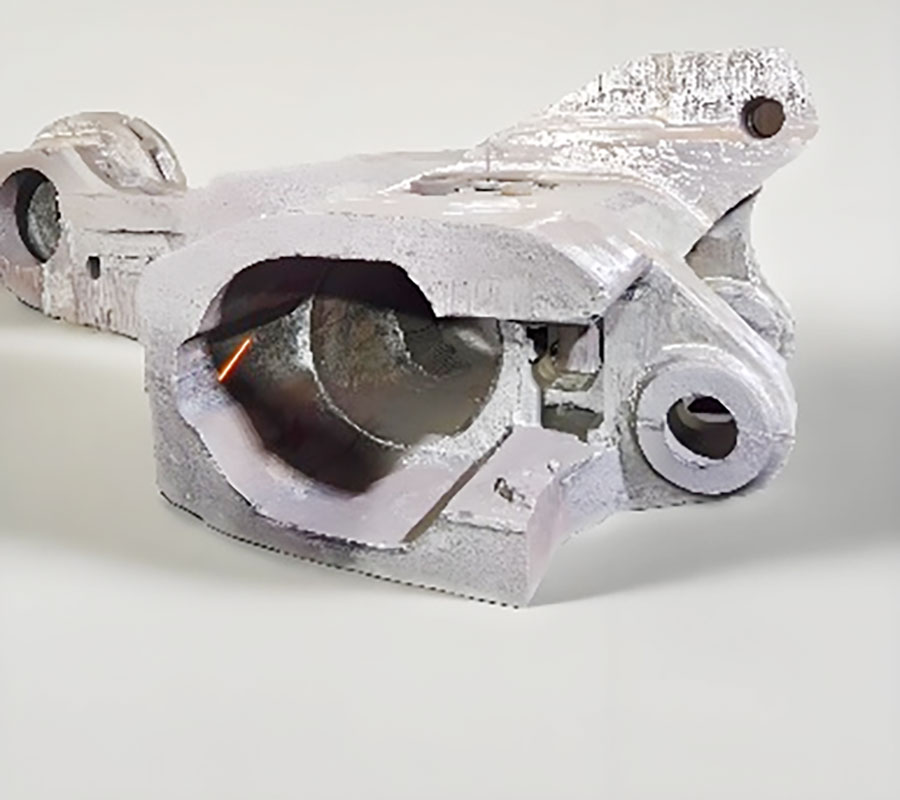
Massive structural components form the backbone of any industrial equipment. When evaluating Machine Tool Column Castings and base beds, the primary cost drivers are material volume, thermal stability, and large-envelope roughing. These parts feature heavy-walled construction and extensive internal ribbing designed to maximize static and dynamic rigidity. The sheer volume of molten metal required dictates a high baseline material cost.
Because these parts are physically massive, they require extended cooling times in the sand mold. Sometimes they sit for several days to prevent severe internal stresses. This ties up valuable foundry floor space. Once at the machine shop, the sheer size of a machine bed dictates that only the largest, most expensive gantry mills can handle the roughing and finishing operations. The logistics of flipping a twenty-ton bed casting to machine multiple faces requires coordinated dual-crane lifts, adding further labor costs and safety protocols to the manufacturing routing.
The cost drivers shift dramatically when analyzing smaller, highly complex moving components like spindle housings or multi-axis milling heads. A common engineering discrepancy arises when procurement teams realize that a small spindle housing frequently costs more to produce than a massive structural column. The complexity of these smaller parts drives the price. Spindle housings require intricate internal coring to create cooling jackets and lubrication channels. Setting these delicate sand cores accurately inside the mold is highly labor-intensive.
During the machining phase, a spindle housing requires extreme precision. Bearing bores must be machined to exact concentricity and cylindrical tolerances to prevent premature bearing failure at high RPMs. Achieving this level of accuracy often requires specialized horizontal boring mills or simultaneous 5-axis machining centers. The time spent dialing in the setup, probing the part, and taking microscopic finishing passes far exceeds the time required to rough-mill a large, flat machine bed.
Raw castings contain massive amounts of residual internal stress generated during the uneven cooling process in the foundry. If a casting is machined without addressing these stresses, the removal of material will cause the component to warp and twist out of tolerance over time. Addressing this requires mandatory stress-relieving processes. Natural aging involves leaving the rough casting outdoors for several months to allow seasonal temperature fluctuations to slowly relieve the stress. While cheap, this method incurs massive inventory holding costs and extends lead times unacceptably.
Modern production relies on artificial thermal stress relieving. The castings are loaded into massive industrial ovens, slowly heated to a specific temperature, held for several hours, and then cooled at a strictly controlled rate. Alternatively, vibratory stress relief uses tuned mechanical vibrations to stabilize the crystalline structure of the metal. Both artificial methods require specialized equipment, consume significant energy, and add mandatory processing fees to the final component cost.
Surface appearance provides no indication of a casting's internal integrity. Subsurface porosity, sand inclusions, or hidden shrinkage cavities can compromise the structural rigidity of the component. To mitigate this risk, foundries and buyers must implement rigorous Non-Destructive Testing (NDT) protocols.
Ultrasonic Testing (UT): Uses high-frequency sound waves to map internal voids and measure wall thickness.
Magnetic Particle Inspection (MPI): Detects microscopic surface and near-surface cracks by magnetizing the part and applying ferrous particles.
Radiographic Testing (X-Ray): Provides a complete internal picture for highly critical components, revealing the exact size and location of inclusions.
While NDT adds upfront costs, it prevents catastrophic financial losses later in the production cycle. Discovering a massive internal void only after a component has undergone dozens of hours of expensive CNC machining results in total scrap. The buyer loses the cost of the raw casting, the freight, and the exorbitant machining time. Establishing clear liability for scrap replacement and mandating upfront NDT is a critical cost-saving investment.
The physical movement of heavy industrial castings represents a substantial hidden cost. Transporting a multi-ton machine bed is not a standard shipping operation. It requires specialized flatbed trailers, heavy-duty chaining, and often overweight or oversize highway permits. Furthermore, these components rarely travel directly from the foundry to the final assembly floor. A typical routing might involve shipping the raw casting from the foundry to a specialized heat-treating facility, then to a heavy-machining contractor, and finally to the OEM assembly plant. Each touchpoint requires specialized rigging crews and heavy-lift overhead cranes. These compounded freight and handling fees routinely add substantial margins to the final landed cost of the component.
The most effective method for controlling costs occurs during the initial CAD phase. Implementing strict Design for Manufacturability (DFM) principles ensures the component is optimized for the foundry process. Engineers must standardize wall thicknesses wherever possible. Transitioning abruptly from a thick, heavy section to a thin wall causes uneven cooling. This leads to hot tears and shrinkage cavities that require expensive foundry interventions. Eliminating unnecessary internal cavities reduces the reliance on fragile sand cores, directly cutting labor costs.
Engineers should also consider draft angles. A minimum of 1.5 degrees of draft allows the pattern to be drawn from the sand without tearing the mold walls, reducing the need for manual mold repair on the foundry floor. On the machining side, engineers must ruthlessly evaluate tolerance requirements. Relaxing geometric tolerances on non-mating surfaces prevents machinists from wasting time on aesthetic finishes. Furthermore, adding strategic machining allowances ensures the machine shop has enough extra material to clean up the surface and achieve flatness, preventing the casting from being scrapped due to minor foundry shifts.
Committing to expensive hard tooling based on an untested design is a massive financial risk. If the final machined casting exhibits harmonic resonance issues or structural weak points, the permanent aluminum tooling must be heavily modified or entirely scrapped. Leveraging rapid prototyping techniques mitigates this risk. By utilizing 3D printed sand molds, engineering teams can pour a limited run of functional prototypes. These prototypes can be fully machined, assembled, and subjected to real-world vibration and load testing. Once the design is validated, the team can confidently invest in permanent production tooling without fear of costly revisions.
Procurement teams constantly weigh the benefits of domestic versus offshore foundry sourcing. Offshore foundries frequently offer lower upfront tooling costs and reduced per-pound material rates due to lower labor overhead. However, these upfront savings must be balanced against logistical realities. Offshore sourcing introduces extended ocean freight lead times, complex customs processing, and high shipping costs for heavy components. Furthermore, managing quality disputes, coordinating NDT standards, and handling scrap replacement across international borders requires extensive administrative oversight. For highly complex, tightly toleranced structural components, the communication advantages and reduced transit times of domestic or near-shore foundries often outweigh the initial offshore price advantage.
Understanding volume scaling is essential for accurate cost projection. In low-volume production, the upfront cost of the pattern and custom machining fixtures represents a massive percentage of the per-unit cost. As production volumes increase, these fixed capital expenditures are amortized over a larger number of parts, driving the per-unit cost down significantly. Procurement teams must calculate the specific breakeven point where investing in high-durability permanent tooling and dedicated CNC fixturing becomes more economical than relying on cheaper, short-term manufacturing methods. Planning for multi-year production runs allows buyers to negotiate better long-term rates with both the foundry and the machining contractor.
Initiate a formal Design for Manufacturability (DFM) review with your foundry before finalizing any CAD models to eliminate unnecessary internal cores and standardize wall thicknesses.
Mandate that all Requests for Quotation (RFQs) explicitly define material grades, required non-destructive testing standards, and final machining tolerances to prevent hidden post-casting fees.
Audit potential manufacturing partners based on their integrated capabilities, prioritizing facilities that offer in-house thermal stress relieving and large-envelope rough machining to reduce freight logistics.
Implement a rapid prototyping phase using 3D printed sand molds to validate structural rigidity and harmonic performance before investing capital in permanent aluminum production tooling.
A: Baseline per-pound rates fluctuate based on the specific alloy, with standard grey iron being the most economical and specialized ductile or steel alloys commanding higher rates. Raw material weight is only a fraction of the final price. Complex internal coring, low foundry yield rates, and low production volumes heavily skew the baseline price upward, making flat per-pound estimates highly inaccurate for complex structural components.
A: Pattern costs scale dramatically with complexity and intended volume. Simple wood patterns or 3D printed sand molds used for rapid prototyping require minimal initial capital. Conversely, complex, multi-core aluminum match plates designed for high-volume, multi-year production runs require significant upfront capital investment, though they drastically reduce the per-part cost over time.
A: Machining raw castings requires massive, highly rigid CNC equipment capable of handling multi-ton components. Operating large-envelope gantry mills or boring machines commands premium hourly rates. Cutting through the hard, abrasive outer skin of a casting requires slow feed rates, while achieving micron-level tolerances demands custom fixturing and strict environmental temperature controls.
A: Small components like spindle housings often feature extreme geometric tolerances, complex internal cooling channels, and precise bearing bores. Achieving these specifications requires multiple setups on advanced 5-axis machining centers. The extensive setup time, probing, and microscopic finishing passes required for intricate parts frequently drive machining costs higher than the basic rough milling of a massive structural bed.
A: Machine tool columns require exceptional static and dynamic rigidity. They demand specific metallurgical properties for vibration damping, extensive internal ribbing, and mandatory thermal stress-relieving treatments to ensure dimensional stability over time. These stringent performance requirements, combined with the sheer size of the molds, elevate their production costs significantly above standard commercial cast parts.
A: The raw materials used in epoxy granite mineral castings often carry a higher baseline cost than raw cast iron. However, mineral casting cures at room temperature, eliminating the need for energy-intensive melting and subsequent thermal stress relieving. Because precision inserts can be cast directly into the base, it drastically reduces final CNC machining requirements, often resulting in overall project savings.
A: Liability depends strictly on the negotiated contract terms. Standard industry practice often limits the foundry's liability to replacing the raw casting itself, leaving the buyer to absorb the lost machining time and freight costs. This financial risk makes upfront Non-Destructive Testing (NDT), such as ultrasonic or X-ray inspection, a critical investment before any heavy machining begins.


