
Views: 0 Author: Site Editor Publish Time: 2026-09-16 Origin: Site


The foundational structure of any machining center dictates its initial precision, operational lifespan, and degradation curve over millions of cycles. Engineering and procurement teams must choose between cast and fabricated bases. This decision permanently impacts vibration control, thermal distortion, tool wear, and overall lifecycle expenses. A misaligned choice leads to premature machine degradation, unnecessary upfront capital expenditure, or rigid supply chain bottlenecks. We evaluate the metallurgical properties, long-term dimensional stability, repairability, and lifecycle return on investment of cast and welded structures to support rigorous procurement decisions.
Vibration Damping: Cast iron structures inherently absorb operational vibrations up to ten times better than welded steel, directly extending the life of cutting tools and spindle bearings.
Thermal Stability: The high thermal mass of castings provides superior resistance to rapid temperature fluctuations, minimizing volumetric accuracy drift during heavy continuous machining.
Dimensional Integrity: While weldments offer superior tensile strength and faster prototyping, they require rigorous thermal stress-relieving to prevent long-term warping—a risk largely mitigated by the monolithic nature of aged castings.
Volume Economics & Supply Chain: Weldments are cost-effective for custom, one-off machines and offer localized supply chain agility; castings dominate in high-volume production where pattern costs are amortized, yielding a lower per-unit cost at scale.
Lifecycle Repairability: Welded structures offer significantly easier post-production modifications and fatigue repairs compared to cast iron, which is notoriously difficult to weld if micro-cracking occurs.
Shifting the metric from mere structural survival to useful precision lifespan changes how we evaluate machine bases. Useful precision lifespan measures how long the equipment holds tight tolerances under dynamic loads. A machine might physically survive for decades on a shop floor. However, if its base warps by a few microns, it loses its ability to produce aerospace or medical components. We evaluate longevity based on sustained volumetric accuracy over thousands of operating hours.
The machine bed acts as the primary sink for kinetic energy. It absorbs cutting forces, spindle vibrations, and thermal loads. Every time a carbide endmill engages raw material, it sends high-frequency shockwaves through the spindle directly into the base. The base must dissipate this energy instantly. If it fails to do so, the vibrations reflect back into the cutting zone. This causes chatter, poor surface finishes, and accelerated tool wear. You will notice this immediately when machining hard alloys like Inconel or titanium.
Identifying common long-term degradation factors helps engineers design better structures. Micro-warpage stands out as a primary failure mode. Residual stresses from manufacturing slowly release over time, twisting the machine bed out of alignment. Resonance-induced fatigue also destroys precision. Constant vibration wears down linear guideways and spindle bearings prematurely. Bearing wear directly correlates to how well the base dampens harmonic frequencies during aggressive roughing passes.
The modern material landscape offers several choices for machine builders. Traditional metals like cast iron and fabricated steel dominate the industry. Emerging alternative composites like epoxy granite and mineral castings provide excellent damping capabilities. These composites offer incredible vibration absorption for specialized grinding equipment. Yet, traditional metals remain the standard due to their proven structural integrity, ease of machining, and predictable thermal behavior across diverse industrial environments.
Failure Mode | Root Cause | Impact on Machining | Structural Prevention Strategy |
|---|---|---|---|
Micro-Warpage | Unrelieved residual manufacturing stresses | Loss of volumetric accuracy, taper in long cuts | Thermal stress relief, vibratory stress relief |
Resonance Fatigue | Poor material damping capacity | Premature spindle bearing failure, chatter | High-mass cast iron, polymer concrete filling |
Thermal Bowing | Uneven heat distribution from coolant/cutting | Z-axis drift, inconsistent part dimensions | High thermal mass materials, symmetrical bed design |
Guideway Fretting | Micro-vibrations at the mounting interface | Loss of positioning accuracy, backlash | Precision hand-scraping, monolithic mounting pads |
Examining the graphite flake structure in grey cast iron reveals why it dominates precision manufacturing. Grey iron contains microscopic graphite flakes dispersed throughout the metal matrix. These flakes act as internal shock absorbers. They dissipate kinetic energy rapidly through internal friction. This natural damping prevents vibrations from amplifying. The graphite also provides natural lubricity. This makes the material easier to machine during the final precision grinding of guideway mounting surfaces.
Pouring a single, continuous structure eliminates weak points. Monolithic rigidity defines cast bases. Mechanical joints and heat-affected zones create vulnerabilities in fabricated structures. A casting avoids these entirely. The continuous grain structure distributes loads evenly across the entire machine bed. This prevents localized stress concentrations that often lead to fatigue cracking under heavy dynamic loads.
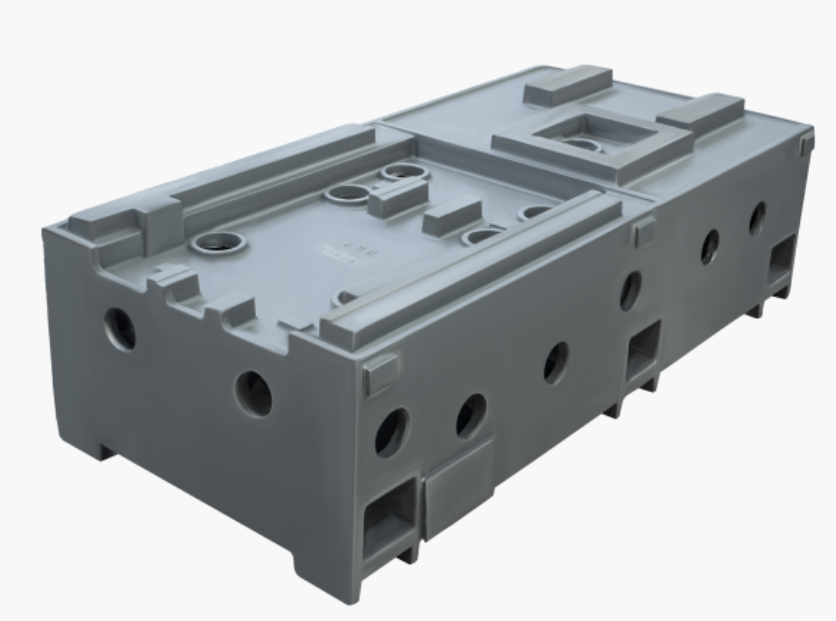
Evaluating compressive strength advantages explains the historical reliance on cast structures. Machine Tool Castings excel in heavy milling and turning applications. Cast iron handles massive downward forces from heavy workpieces and aggressive cutting parameters. While its tensile strength is lower than steel, its compressive strength is vastly superior. This makes it the ideal foundation for machines carrying multi-ton payloads on their tables.
Acknowledging production realities helps procurement teams plan effectively. Castings introduce upfront friction. High pattern costs require significant initial capital. Complex mold design demands specialized engineering expertise to manage cooling rates and prevent internal voids. Foundries require longer initial lead times. You must implement robust forecasting to manage these timelines. However, once the pattern exists, producing subsequent units becomes highly efficient and repeatable.
The specific grade of cast iron matters immensely. Machine builders rarely use basic pig iron. They specify engineered materials like Meehanite or high-grade grey iron (ASTM Class 40 or 50). These specific grades offer tightly controlled carbon and silicon ratios. This ensures the graphite flakes form in the correct size and distribution. Poorly controlled casting chemistry results in hard spots (chill) that destroy cutting tools during the final machining of the bed.
Steel offers a high modulus of elasticity and superior tensile strength compared to cast iron. These structural characteristics allow engineers to design thinner, lighter structural walls. A welded steel base can achieve similar overall stiffness to a cast base while weighing significantly less. This weight reduction benefits high-speed gantry machines where moving mass must be minimized to achieve high acceleration rates and rapid traverse speeds.
Design agility represents the strongest advantage of fabricated bases. Engineers can rapidly iterate and modify complex geometries. You do not need expensive foundry patterns. If a design flaw emerges during prototyping, you simply cut and re-weld the steel plates. Post-production modification is equally straightforward. Welding new mounts, brackets, or coolant enclosures onto a deployed machine takes minimal effort and standard shop equipment.
The residual stress problem remains the biggest hurdle for welded structures. The welding process introduces localized heat-affected zones (HAZ). As the molten weld pool cools and contracts, it pulls against the surrounding cold steel. This creates massive internal residual stresses. If you do not properly treat these stresses, the base will experience micro-warping over time. The steel will slowly twist as the stresses naturally relax, destroying the machine's geometric alignment.
Addressing inherent resonance issues requires secondary damping solutions. Hollow or plate-steel structures suffer from damping deficits. They ring like a bell when subjected to cutting vibrations. To combat this, manufacturers often fill the hollow steel cavities with polymer concrete, epoxy granite, or specialized sand. These secondary damping solutions increase mass and absorb vibrations, but they add manufacturing complexity and labor hours to the build process.
Fabrication requires strict adherence to welding procedures. You cannot simply weld plates together and expect precision. Welders must use specific filler metals, control interpass temperatures, and sequence their welds to minimize distortion. A poorly sequenced weldment will warp so severely during fabrication that it cannot be machined flat. This requires extensive rework, flame straightening, or complete scrapping of the base.
Comparing the specific damping capacity of grey iron versus fabricated carbon steel reveals a stark contrast. Grey cast iron dampens vibrations up to ten times faster than untreated welded steel. This inherent material property dictates machining performance. When a cutting tool engages metal, it creates high-frequency chatter. Cast iron absorbs this chatter immediately, preventing it from resonating through the machine frame.
Superior damping in High Precision Machine Tool Castings translates directly to improved workpiece surface finish. Less vibration means the cutting edge glides smoothly through the material. It also extends cutting tool life significantly. Unmitigated vibration chips carbide inserts and destroys spindle bearings. Over a 10-year lifecycle, a cast base drastically reduces the replacement frequency of linear guideways and ball screws.
Steel weldments require engineered damping. Without polymer fill, a steel bed transmits vibration directly back into the cutting tool. This causes visible chatter marks on the machined part. Operators must slow down their feed rates to compensate for the lack of structural damping. This reduces overall machine productivity and increases cycle times on every part produced.
Evaluating specific heat capacity and thermal conductivity differences highlights thermal stability. Cast iron possesses a high thermal mass. It absorbs heat slowly and releases it slowly. Steel heats up and cools down much faster. In a machining environment, temperatures fluctuate constantly due to cutting friction, hot chips, coolant application, and ambient shop conditions.
We rely on Cast Iron Machine Tool Bed Castings to absorb and distribute heat evenly from the cutting zone. This prevents localized thermal bowing. Thinner-walled weldments remain highly vulnerable to rapid thermal expansion and contraction. During aggressive, high-speed machining cycles, a welded base can expand unevenly. This thermal drift ruins volumetric accuracy, causing parts to fall out of tolerance during long production runs.
Coolant application exacerbates thermal issues in weldments. If cold coolant splashes against one side of a hot steel bed, that side contracts rapidly. The other side remains expanded. This creates a bimetallic strip effect, causing the entire machine column to lean. Cast iron's thermal inertia resists this rapid localized contraction, keeping the spindle perfectly perpendicular to the table.
Ensuring decades of geometric stability requires managing internal stresses. Historically, foundries practiced natural aging. They left castings outside to weather for months or years. The natural temperature cycles slowly relieved internal stresses. Today, modern foundries use vibratory or thermal stress relief. They bake the castings in massive ovens to accelerate the relaxation process. This guarantees the base will not warp after final machining.
Weldments demand absolute adherence to post-weld heat treatment (PWHT). You cannot skip this step. The entire welded structure must enter a stress-relieving furnace. It is heated to a specific temperature, held there, and cooled at a controlled rate. If weldments are subjected to heavy dynamic loads without perfect stress relief, they face a high risk of long-term dimensional drift. The base will creep, and the machine will lose its precision.
Vibratory stress relief (VSR) offers an alternative for massive weldments that do not fit in standard furnaces. Technicians attach heavy eccentric motors to the steel frame and vibrate it at its resonant frequency. This shakes the molecular structure, allowing residual stresses to settle. While effective, VSR requires highly skilled operators to verify that the stresses have actually been relieved.
Weldment fatigue repair offers straightforward maintenance. If a fabricated steel base develops a fatigue crack after years of heavy use, repair is simple. A technician grinds out the crack, preps the joint, and re-welds the area. The repair can often be performed on-site with standard welding equipment. This minimizes machine downtime and keeps maintenance costs low.
Casting fracture mitigation presents severe metallurgical difficulties. Repairing cracked cast iron requires highly specialized procedures. You must pre-heat the entire casting to prevent thermal shock. You must use expensive nickel-based consumables. Finally, you must control the cooling rate meticulously to prevent new micro-cracks from forming. Because repair is so difficult, prevention via proper finite element analysis (FEA) design remains critical for cast structures.
Performance Metric | Machine Tool Castings | Steel Weldments |
|---|---|---|
Vibration Damping | Excellent (Inherent graphite structure) | Poor (Requires secondary polymer filling) |
Thermal Stability | High thermal mass, slow to distort | Low thermal mass, prone to rapid expansion |
Dimensional Integrity | Highly stable after initial stress relief | Prone to creep if PWHT is inadequate |
Design Agility | Rigid, requires expensive new patterns | Highly agile, easy to modify and iterate |
Repairability | Difficult, requires specialized welding | Simple, standard grinding and re-welding |
Calculating the breakeven point for pattern tooling costs dictates the manufacturing choice. Cast manufacturing requires a heavy upfront investment in wooden or aluminum patterns. If you build a single custom machine, casting makes no financial sense. However, if you produce a standard line of CNC lathes, the pattern cost amortizes across hundreds of units. The per-unit cost of a casting quickly drops below that of a weldment at volume.
Factoring in the hidden costs of weldments reveals a different financial picture. A welded base seems cheaper initially. But you must account for secondary machining, mandatory thermal stress relieving, and potential polymer-fill requirements. The labor hours required to cut, fit, weld, grind, and fill a steel base often exceed the cost of pouring a standard casting.
You must also consider the cost of scrap during the prototyping phase. If a cast prototype fails, you lose the casting and potentially have to modify the expensive pattern. If a welded prototype fails, you can often salvage the frame by cutting out the defective section and welding in new supports. This makes weldments highly attractive for experimental machine designs.
The structural choice impacts consumable costs over a 20,000-hour operational window. Cast bases reduce harmonic vibrations. This directly lowers the consumption rate of carbide tool inserts. Tools last longer, and surface finishes remain consistent. Spindle rebuilds become less frequent because the bearings do not absorb excessive chatter.
Evaluating scrap rate reduction further justifies cast bases. Superior dynamic stiffness prevents tool deflection during heavy cuts. This keeps parts within strict dimensional tolerances. A rigid cast base reduces the number of scrapped parts caused by chatter marks or geometric deviations. Over the machine's lifespan, the savings in raw materials and consumable tooling heavily offset the initial pattern investment.
Downtime costs dwarf all other expenses in a production environment. When a machine goes down for a spindle replacement caused by excessive vibration, you lose days of production. Cast bases protect the delicate internal components of the machine, maximizing spindle uptime and keeping production schedules on track.
Sourcing logistics differ vastly between the two methods. Large castings rely on specialized global foundries. Shipping massive iron blocks across oceans introduces supply chain bottlenecks. Lead times can stretch into months. Conversely, you can source steel fabricators locally. Local fabrication bypasses international shipping delays and provides greater agility for custom projects.
Energy economics play a growing role in manufacturing decisions. Compare the carbon footprint of both methods. Foundry melting processes consume massive amounts of energy to liquefy iron. However, the localized energy footprint of steel fabrication also adds up. Cutting, welding, and running massive stress-relieving ovens require significant power. Castings often win in sustainability for high-volume production due to the efficiency of modern induction furnaces.
We utilize Heavy Duty Machine Tool Structural Castings when long-term supply chain stability is established. Once a foundry perfects the mold and pouring process, they can deliver consistent bases on a predictable schedule. Weldments, relying on manual labor and individual welder skill, can suffer from inconsistent quality if the fabrication shop experiences high employee turnover.
Porosity and inclusions threaten casting integrity. Internal voids weaken the structure and can expose flaws during final machining. If a void sits right where a linear guideway needs to be mounted, the entire casting becomes scrap. To mitigate this, you must specify rigorous non-destructive testing (NDT). Require ultrasonic or X-ray inspection for all critical load-bearing sections. This ensures the internal grain structure remains solid and free of defects before you invest hours in precision grinding.
Supplier vetting prevents catastrophic production delays. Partner with foundries experienced specifically in heavy machine tool bases. General foundries often struggle with the complex core geometries required for machine beds. Inexperienced suppliers cause core shifts, uneven wall thicknesses, and severe cooling stresses. Audit the foundry's cooling protocols and stress-relief oven calibration before signing a contract.
Request material certification reports for every batch of poured iron.
Mandate ultrasonic testing on all guideway mounting surfaces.
Verify the foundry's thermal stress relief oven charts for accurate temperature holds.
Inspect the wooden or aluminum patterns annually for wear and dimensional drift.
Weld fatigue destroys fabricated bases under cyclic loading. You must design joint geometries to minimize stress concentrations. Avoid sharp corners and abrupt transitions. Use full-penetration welds on all critical junctions. Implement strict welding procedures and require certified welders to perform the fabrication. Proper joint design prevents cracks from propagating through the heat-affected zones.
Verification of stress relief guarantees long-term stability. Implement strict quality control protocols to verify that thermal stress relieving was successful. Do not trust the furnace chart alone. Perform dimensional checks before and after the PWHT process. If the base moves significantly during the stress relief cycle, it may require a second treatment before final precision machining begins.
Specify full-penetration welds for all primary load-bearing joints.
Require magnetic particle inspection (MPI) on all structural welds to detect surface cracks.
Mandate a controlled cooling rate during post-weld heat treatment to prevent new stresses.
Seal all hollow cavities completely if utilizing polymer concrete fill to prevent moisture ingress.
Define your production volume to calculate the acceptable tooling amortization period for cast patterns.
Consult with a specialized foundry to review your machine bed design for manufacturability and core stability.
Run a comparative finite element analysis (FEA) on both a cast and welded version of your base to evaluate dynamic stiffness.
Establish strict non-destructive testing (NDT) requirements for whichever manufacturing method you select.
A: Grey cast iron contains microscopic graphite flakes that absorb and dissipate vibrations significantly better than steel. This natural damping prevents harmonic resonance from reaching the cutting zone, leading to superior surface finishes, tighter tolerances, and much longer cutting tool life.
A: They can. The extreme heat from welding creates massive residual stresses within the steel. If the weldment is not properly thermally stress-relieved in a furnace before final machining, it will slowly warp as those internal stresses naturally relax over months or years.
A: Weldments can typically be fabricated locally in a matter of weeks. Castings require pattern creation, complex molding, pouring, and controlled cooling. This process can take several months for the first article, though subsequent cast units are produced much faster.
A: Yes. Manufacturers often fill welded hollow steel bases with polymer concrete, epoxy granite, or specialized sand. This increases the structural mass and significantly improves vibration damping, though it adds to the overall manufacturing complexity, weight, and labor cost.
A: Assuming proper maintenance of the linear guides, ball screws, and moving components, the cast iron base itself can easily last 30 to 50 years. Its monolithic structure and high thermal mass ensure it rarely loses its fundamental geometric stability.
A: While historically left outside to age in the weather for months or years, modern foundries rarely use natural aging. They now utilize thermal stress-relieving ovens or vibratory stress relief to accelerate the relaxation process, achieving dimensional stability in a fraction of the time.


